
 Locations




CERT Systems, the only Canadian company to be named one of Tencent’s CarbonX 2.0 winners, is tackling the pollution from the production of ethylene, one of the world's most widely produced organic chemicals.
A Toronto-based startup that began as a University of Toronto team, CERT invented a process that transforms a carbon dioxide (CO2)-rich solution into molecules like ethylene through a jolt of electricity.
CERT was spun out in 2021 to “create a new way of making essential chemicals that we need without the use of fossil fuels,” Alexander Ip, the co-founder and CEO of CERT, said in an interview with Sustainable Biz Canada.
Ethylene is used to make polyethylene, a ubiquitous plastic, as well as surfactants and fuels. It is almost entirely produced through the steam cracking of fossil fuels, which generates a significant amount of greenhouse gas emissions. One estimate says ethylene production is responsible for almost 13 per cent of the petrochemical industry’s CO2 emissions.
CERT aims to address this problem by significantly drawing down the CO2 emissions from ethylene production with a scalable system it expects will be in high demand.
CERT’s electrochemical technology
The electrochemical process developed by CERT starts when a liquid solution in a reactor is funnelled to an electrolyzer. The CO2 and water in the solution are split with electricity, then reformed into molecules like ethylene.
The CO2 that is added to the solution is supplied via carbon capture from point source or the air, Christine Gabardo, co-founder and chief technology officer of CERT, said in the interview.
CERT’s technology is a substitute for a carbon-intensive process. Steam cracking outputs one to two tonnes of CO2 per tonne of ethylene, while CERT’s method ends with the sequestering of three to four tonnes of CO2, Gabardo explained, meaning net-negative production.
If used for plastics, the material would trap the greenhouse gas. If used as fuel, it would release the CO2 back into the atmosphere, but Ip noted it would be a neutral balance compared to exploiting more fossil fuels.
Competing in a crowded market
Ip acknowledged the barriers CERT has to overcome to compete against established businesses in the ethylene industry. Right now, the ethylene that CERT’s technology can produce is priced similarly to bio-based ethylene, which Ip pegged as costing two to three times more than fossil fuel-based ethylene.
Aware of the challenge, CERT plans to first target the markets that are less sensitive to costs and willing to pay for a sustainable good, Ip said. He specified consumer-facing brands in cosmetics or personal care that are interested in using a carbon-negative plastic for packaging.

Additionally, Ip noted the large ethylene players have customers that are requesting more sustainable materials, a boon for CERT. There are policies for carbon border taxes and sustainable aviation fuel (SAF) adoption which CERT expects would lead to higher demand for low-carbon ethylene.
In the short- to medium-term, Ip sees CERT’s systems installed in chemical refineries that produce and process ethylene in order to mitigate the carbon emissions by feeding it into their ethylene stream.
“We can start transitioning them to more sustainable processes using our clean ethylene feedstock,” Ip said.
He also envisions CERT selling materials such as polyethylene or surfactants to consumer-facing brands. This would let the company “prove out that there is the market demand at that chain, and we can then bring those customers in with us as we’re looking to scale with those chemical incumbents,” Ip said.
Ultimately, he hopes CERT can be a technology provider, so Ip's vision is for CERT to collaborate with and supply its technology to large chemical manufacturers.
As CERT scales up, Ip wants the company to be be economically competitive with incumbents. As its technology runs on electricity, it can take advantage of low-cost renewable electricity, which Ip and Gabardo said would further bring down costs and carbon emissions.
CERT’s next pilot
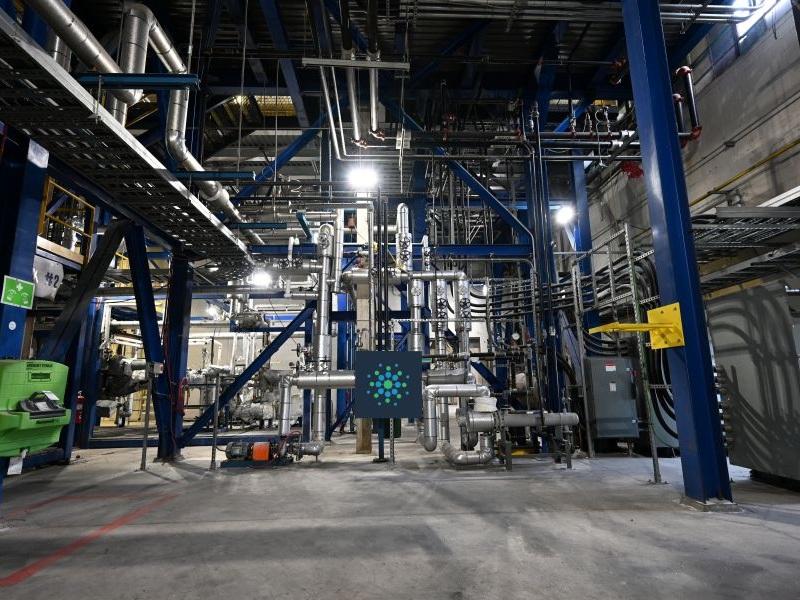
CERT has conducted two pilots to date, Gabardo said. The first was in 2018 to compete for the XPRIZE. The second was in 2025 for an air-to-ethylene process. CERT’s next pilot is for a commercial-scale reactor that can produce “meaningful quantities of product” to its first offtake customers, Ip said.
As one of the 16 winners of CarbonX 2.0, CERT is sharing a US$30-million pool of funds. The funding from Tencent and Canadian agencies will go toward financially supporting the upcoming pilot, Ip added, and connecting CERT to potential end users. Ip declined to disclose how much funding CERT is receiving from the pool
By end of the year, CERT hopes to have a one-tonne-scale system finished in Toronto. Then a year later, the startup plans to have a demonstration unit running that can produce 25 tonnes of ethylene per year. CERT is finalizing the location of the latter, which could be in Canada, the U.S. or Asia, Ip said. The 25-tonne-per-year system is to serve as a demonstration unit for potential customers, he said.
By 2030 and beyond, Ip’s ambition is to see CERT technology operating at large-scale in ethylene refineries to supply the plastics and SAF markets. That would mean supporting the production of hundreds of kilotonnes of ethylene, Gabardo said.


 Industry Events
 Locations