



 Locations

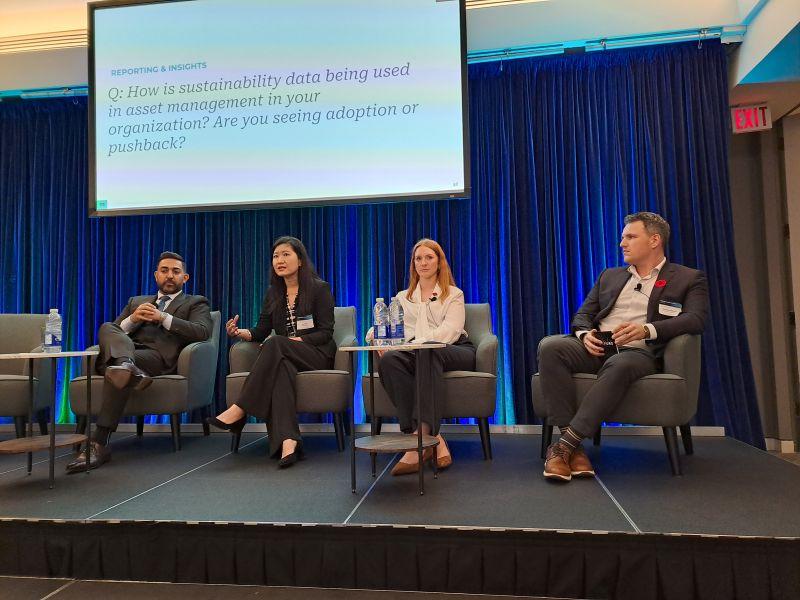





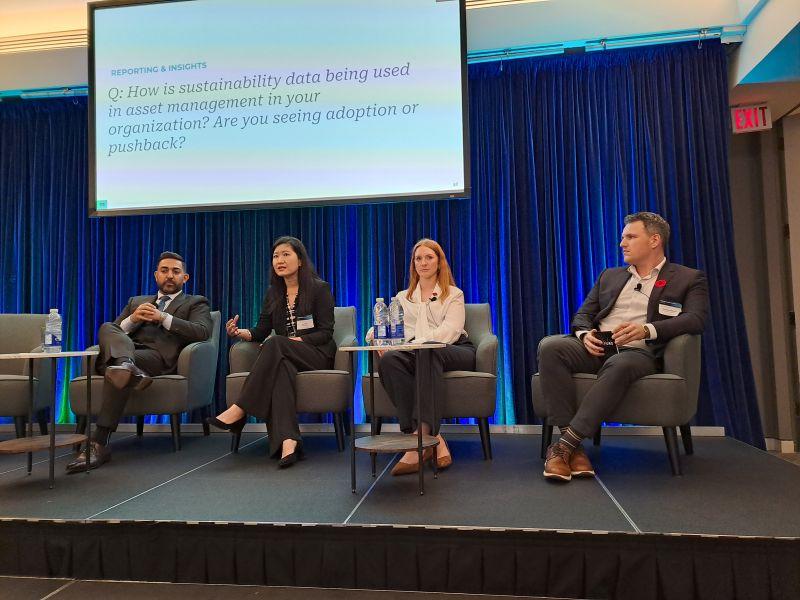
Commercial real estate must move beyond tracking and reporting sustainability metrics to demonstrating how greener buildings deliver measurable environmental and financial returns, industry leaders said at a GRESB Partner Insights event in Toronto.
Held Wednesday evening at a downtown Toronto office, the gathering was co-hosted by GRESB, Measurabl and S&P Global Energy, and brought together some of Canada’s biggest players in real estate sustainability.
The event opened with a review of this year’s GRESB results, the annual global benchmark for real estate sustainability. Speakers highlighted the results, standouts in Canada and sector leaders, while discussing how the 2028 GRESB standard will place greater emphasis on measured performance.
Just as the standard is shifting to emphasize decarbonization outcomes such as energy efficiency, electrification and clean energy, Canada's commercial real estate sector must make a similar transition, panellists said.
“Reports are not outcomes,” Ali Hoss, head of sustainability and asset optimization at Colliers, said on the panel. “The industry’s looking for evidence. And I think in the domain of sustainability, we have been spending a lot of time on reporting.”
Decision-critical data
Panel moderator Edward Allen, chief commercial officer of Measurabl, asked the panellists what makes sustainability data decision-grade, and where the data falls short.
Data of such calibre goes beyond reporting energy use to identify the factors driving consumption, said Thomas McKeown, the associate director of global sustainable investing and operations at Oxford Properties. It can explain why energy use is changing and outline the factors the company can influence, he explained.
Decision-grade data can also inform financial decisions, such as determining when building equipment should be replaced, Ailey Roberts, the global head of sustainable investing at BGO, said.
But numbers alone cannot stimulate action, Hoss said. Translating sustainability metrics into meaningful business decisions is key to success. Many specialists in commercial real estate investment, property management and asset management do not speak sustainability. Terms like energy use intensity and kilowatt-hours are “meaningless for anybody who wants to make a return on investment in commercial real estate,” Hoss said.
Value creation at the heart of real estate sustainability: Hoss
But they do understand the language of money. Rather than fixating on how sustainability leads to utility savings which have a minuscule effect on the total operational costs of the portfolio, concentrate on how those savings elevate its value, Hoss said.
When speaking to asset managers, sustainability professionals should focus not only on decarbonization and reducing cost exposure, but also how greener buildings can boost revenue through stronger tenant engagement, attract sophisticated tenants and inform amenity planning, he added.
From the tenant's perspective, many businesses have expressed frustration at having little control over their buildings' sustainability performance, Lin Fan, head of sustainability analytics services at S&P Global, said. Tackling their supply chain greenhouse gas emissions becomes extremely challenging as a consequence.
S&P advises those clients to talk to the asset manager and inquire about their sustainability plan. Being proactive and providing tenants with more information “may make your property more favourable, as you’re talking with the lease renewal with your plan in the future,” Fan said.
2028 standard could transform the conversation
With GRESB set to introduce performance-based scoring in 2028, Allen asked panellists how the change could affect the industry.
Hoss wants to see GRESB focus on comparing portfolios to a local market, as opposed to globally. Squaring up a property in Canada to one in Australia with its wildly different climate and electricity system “doesn’t really add a lot of value to asset managers,” he added.
Performance-based scoring will push the commercial real estate sector “to get back to the investment fundamentals,” Roberts said, like a greater focus on drivers of net operating income at a property. BGO, for example, could prioritize improvements at lower-performing properties to strengthen their results.
“I think it’ll actually allow us to transform the conversation with our portfolio management and asset management teams,” she said.





 Industry Events
 Locations

