



 Locations






The EU-Canada Cleantech Innovation Showcase in Vancouver brought 20 European cleantech companies together with Canadian investors and public-sector leaders Tuesday, as the firms pitched technologies designed to tackle some of Canada’s biggest sustainability challenges.
Canadian investors and public-sector leaders heard pitches from the companies and networked with representatives at the event held at Northeastern University’s Vancouver campus.
The event was centred on five areas: built environment, Indigenous and remote communities, water and the blue economy, energy resilience and grid, and data centres and digital infrastructure.
The showcase was organized by Low Carbon Business Action in Canada, an EU-funded initiative delivered in partnership with organizations including Vancouver-based ClimateDoor. The initiative connects commercially ready EU cleantech companies with Canadian utilities, municipalities and Indigenous communities and helps them reach commercial agreements.
Canada and the EU have a relationship built around democracy, human rights and free and fair trade, Geneviève Tuts, the EU ambassador to Canada, said in a message to the summit. At a time when those values are increasingly contested, she said, there is “a very clear” opportunity to turn shared values into “shared leadership in green growth.”
The 20 firms presenting at the summit
Four firms in the built environment category were highlighted:
Hydraloop Systems, from the Netherlands, recycles greywater on site, reducing a building’s water use by up to 45 per cent. Hydraloop’s technology could be used by multifamily developers, hotels, fitness clubs, student residences and municipalities in Canada, attendees were told. Apartment developers could add more units per building, improving the business case for a project, Jae Mather, the chief innovation officer of ClimateDoor, said during a presentation.
Coral Construction Technologies, a Czech 3D-printing construction firm, can build the equivalent of a 1,000-square-foot home in 16 hours, Mather said. Its process can match the needs of Indigenous housing programs, remote projects, municipal transit shelters and utility enclosures, according to Mather’s presentation. Coral has secured two letters of intent in Canada.
JUUNOO is a Belgian company that developed a bundled interior system designed for commercial real estate developers. The system is designed around modularity and reusable components, combining speed and circularity.
FN Nano, based in the Czech Republic, is behind a coating technology which can be applied on buildings to purify the air, making healthier indoor and outdoor environments.
Water and blue economy
IADYS, a French company, makes an autonomous drone that collects waste and hydrocarbon pollution from harbours. Called the Jellyfishbot, the company recently demonstrated the drone in the Port of Vancouver.
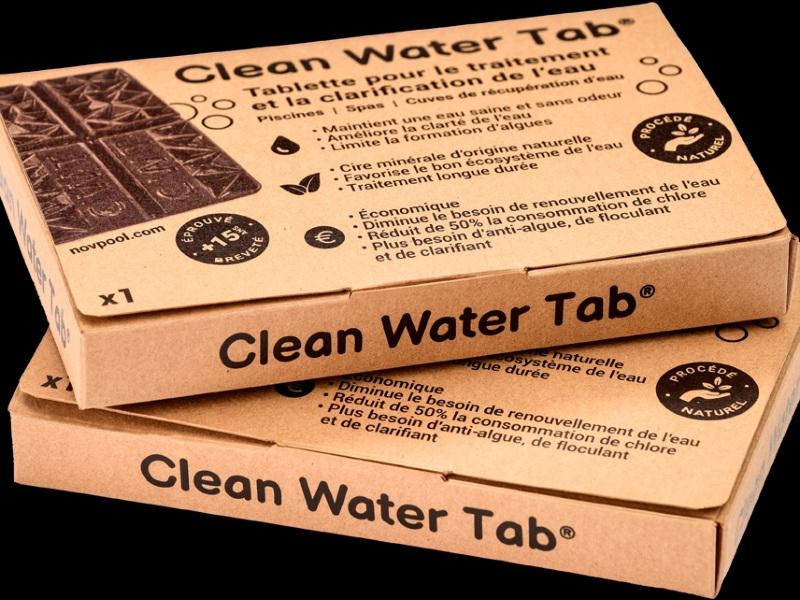
Novpool is the maker of the Clean Water Tab, a mineral block that contains bacteria which “enables water to clean itself,” Mather said. One block made by the French company can treat a pond, tank or pool for three to six months. The product can match the needs of First Nations communities and rural communities, according to Mather's presentation.
Waterly, a Polish firm, created an autonomous water quality monitoring system based on sensors, cloud computing and artificial intelligence (AI), ideal for lakes, rivers, reservoirs and industrial facilities.
Sweden-based Primozone is the developer of ozone generators used for industrial applications, particularly water treatment.
Finnish company Awake.AI is the developer of AI-powered software which optimizes port calls and berth planning to save time, money and carbon emissions.
Energy resilience and grid
Belgium-based MITIS makes a microturbine that converts methane and biogas into power and heat without combustion, Mather explained.
Finrenes, a Finnish company, developed a pre-treatment technology that allows biogas plants run to on wet wood waste and straw. Canadian biogas and renewable natural gas producers and First Nations communities would fit the company’s technology, Mather’s presentation stated.
Germany’s EluMobility is behind energy management software that optimizes the charging of electric vehicles in fleets.
Enerpoly is a Swedish developer of zinc-ion stationary batteries that are non-flammable and made at low cost.
Data centres and digital infrastructure
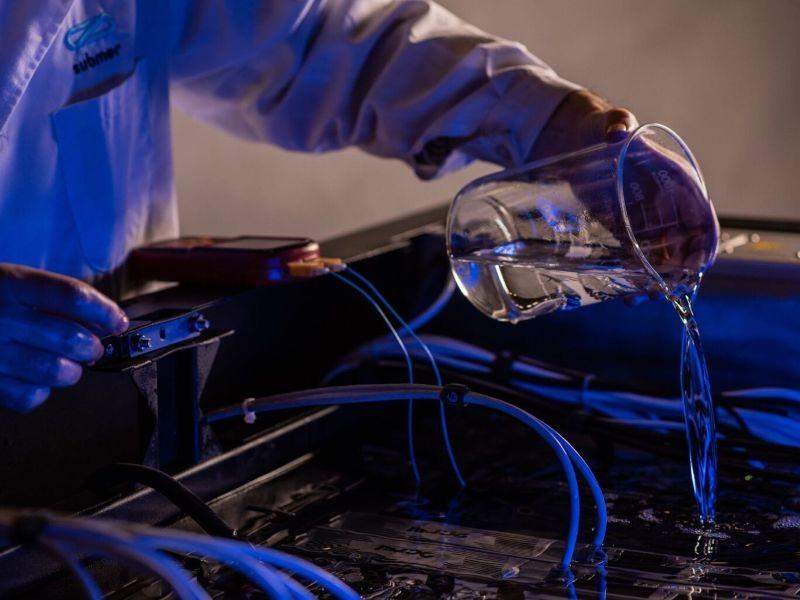
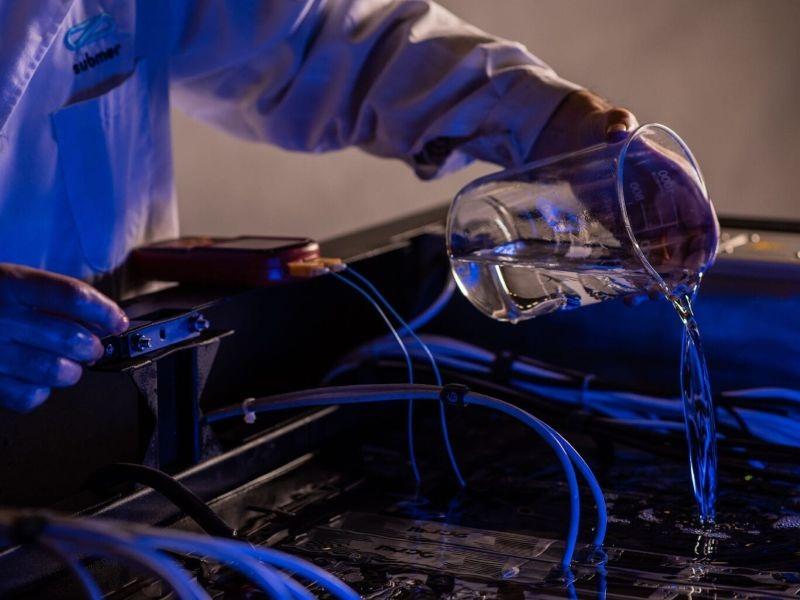
Submer, a Spanish firm, has developed an immersion-cooling system that submerges data-centre servers in fluid, which the company says is more energy efficient than air cooling. “It’s shocking that this is not standard,” Mather said about Submer’s technology.
France-based Emtez created fireproof cabinets, containers and walk-in rooms to store lithium-ion batteries for data centre and telecom operators, electric vehicle fleet depot operators and insurers. Emtez is looking for its first Canadian pilot and deployment partners.
Enogia, from France, is the designer of micro-turbomachinery used for heat-to-electricity conversion. It is focused on the production, storage and use of energy, including air compressors for hydrogen fuel cells.
Remote and Indigenous communities
KiRa Technology is the maker of a carbon-negative micro-cogeneration system contained in a 10-foot shipping container. Remote communities in Canada could use it to produce electricity and heat with wood chips. The Italian company is developing its first pilot in Canada with Off Grid Supply.
Energy of Tomorrow is a Hungarian developer of hybrid systems that combine wind, solar and energy storage for remote sites.
Sweden-based Wayout conceived and built a modular micro-factory that can treat local water sources — even brackish or salty — into drinking water. Indigenous communities under boil water advisories, remote camps and emergency response units are an ideal fit, the presentation stated. Wayout is looking to deploy its first Canadian pilots.
Dall Energy is a Danish firm that developed low-emission biomass gasification heat plants which run on wet, low-grade local biomass.
Taken together, the technologies showcased an opportunity to bring European cleantech solutions to Canadian markets and communities at a time when demand for sustainable infrastructure is growing.
"We're in the right place at the right time with something really great to take advantage of here," David Sanguinetti, president of Sanguinetti Engineering and former CEO of Foresight Canada, said in a speech.



 Industry Events
 Locations
