Locations




Boralex Inc. (BLX-T) and PowerBank Corporation (SUNN-Q) are starting the year by commissioning their energy storage projects in Ontario, adding to the grid capacity of a province that has been a hotbed for such developments.
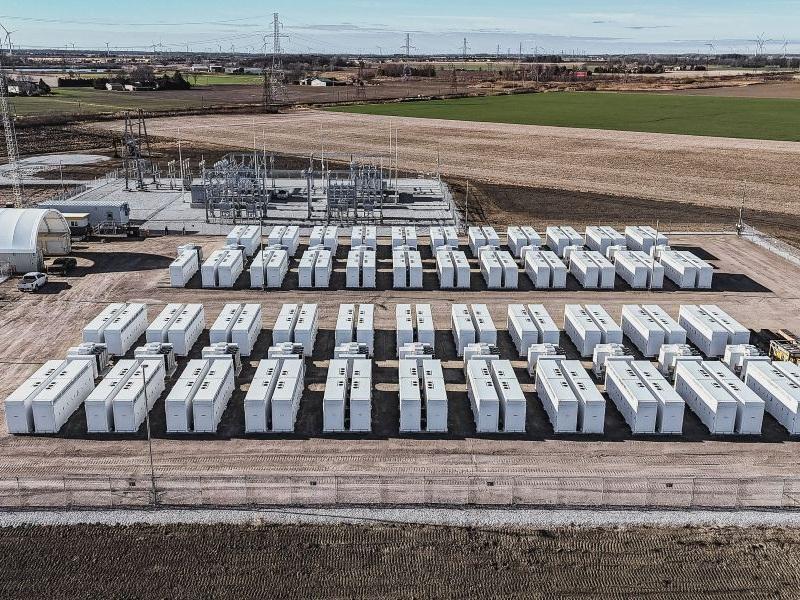
Kingsey Falls, Qué.-based Boralex unveiled the commercial commissioning of its Sanjgon Battery Energy Storage project Tuesday morning. The 80-megawatt (MW) or 320-megawatt-hour (mW-h) facility is located in the Municipality of Lakeshore. It was formerly named the Tilbury Battery Storage Project, and is being developed in partnership with the Walpole Island First Nation.
Toronto-based PowerBank also announced progress on its project. Named the SFF-06 Battery Energy Storage System, it is a five MW asset located in Cramahe, a township between Toronto and Kingston. It is set to be the company’s first operational battery energy storage project. Commercial operations are expected to start this month.
Acquired through PowerBank’s acquisition of Solar Flow-Through Funds Ltd. in July 2024, SFF-06 also involves a significant Indigenous stake. It is owned by ProjectCo, a company split evenly between PowerBank and a partnership of First Nations communities.
The Sanjgon project is Boralex’s first operational energy storage facility in North America. Its commissioning “marks a pivotal moment in our journey toward a more flexible, resilient and affordable energy system,” Patrick Decostre, president and CEO of Boralex, said in a release.
Both companies previewed other upcoming energy storage projects in Ontario, a province that is leading Canada in deployment of the infrastructure.
Boralex's future energy storage projects in Ontario
After Sanjgon, Boralex plans to commission its 300 MW or 1,200 mW-h Hagersville Battery Energy Storage Park in the coming weeks. Once operational, the two assets will make Boralex the largest battery storage operator in Canada, the company says. Almost $540 million in financing was closed for the project in 2024.
Boralex, a notable developer and producer of renewable energy and energy storage, also has other storage projects under development.
In Chatham, neighbouring the Sanjgon project, Boralex is developing an asset planned to be between 300 and 600 MW. Initially scheduled for commercial operations in the spring of 2025, an updated timeline has yet to be announced.
In Oxford County, near London, the company plans to start construction on its 125 MW energy storage project “shortly.” Commercial operation is planned for 2027.
Farther in the future is the Lennox Battery Energy Storage Project, designed to have a capacity up to 200 MW or 1,600 mW-h. If awarded a contact, Boralex anticipates commercial operation of the facility will begin in 2030.
"We see increasing need to build (battery energy storage system) facilities — whether in Ontario or across North America,” Darren Suarez, Boralex’s vice-president of public affairs and communications in North America, said in an interview with Sustainable Biz Canada in 2025.
PowerBank's storage projects
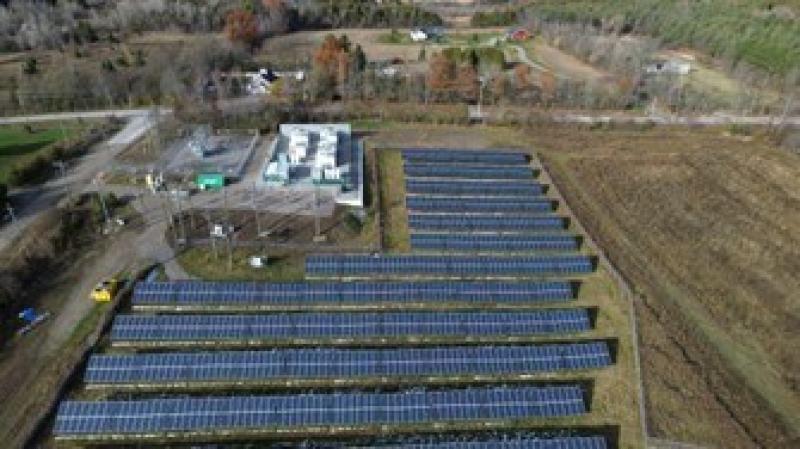
PowerBank has plans to develop two more battery energy storage projects in Ontario.
The first is the 903 project. Planned to be sited in Armour, a township near Algonquin Provincial Park, it is a five MW or 20 mW-h asset.
The second is the OZ-1 project. Unlike 903, it is in a more uncertain position. Due to concerns about permitting, PowerBank and its supplier entered into a termination agreement. Both parties agreed to “terminate the OZ-1 equipment supply and long-term service agreements, with PowerBank relinquishing all rights and obligations,” a release states.
Once there is permitting certainty, PowerBank intends to re-enter into agreements with the supplier, or pursue an alternative company.
The planned capacity of OZ-1 has not been not disclosed.
Ontario spearheading energy storage
Ontario is one of Canada’s leaders in planned deployments of battery energy storage. The Independent Electricity System Operator (IESO), the province’s power system manager, anticipates almost 3,000 MW of installed energy storage capacity will enter the grid by 2028.
The provincial government is interested in the infrastructure because it anticipates soaring electricity demand from population growth, electrification and industries such as manufacturing and data centres. The storage assets can help manage the pressure by holding low-carbon energy from sources such as hydro, nuclear and renewables during periods of low demand, and releasing it when needed by the grid.
One of the cornerstone projects is the Skyview 2 Battery Energy Storage System in development by Toronto-based Potentia Renewables Inc. Construction on the 411 MW project in the Eastern Ontario Township of Edwardsburgh Cardinal started in November 2025.
“We see storage, especially combined with renewables, as being an important part of the supply mix to help us maintain reliability,” Stephen Nusbaum, the IESO’s senior manager of resource integration, told Sustainable Biz Canada in 2025.


 Industry Events
 Locations