


 Locations



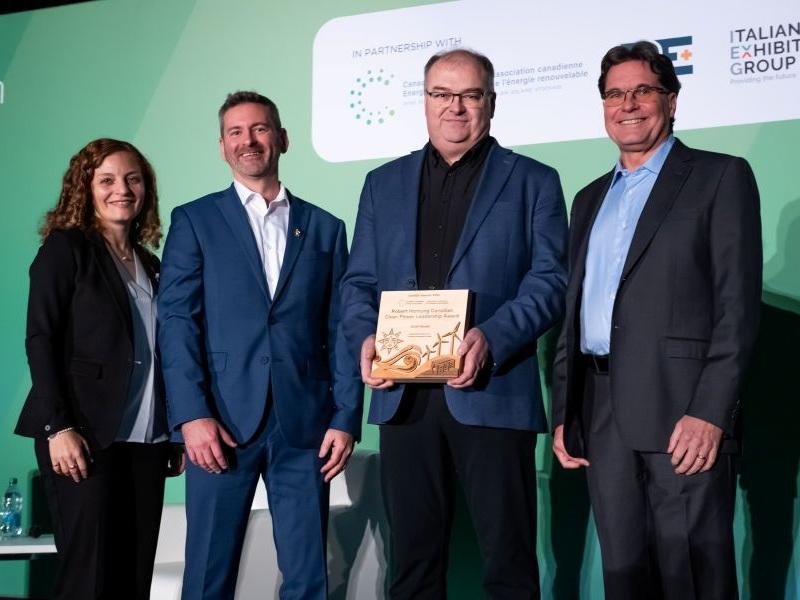
An Ontario research facility, an Indigenous-led clean energy company and a Nova Scotia wind farm are among the winners of the Canadian Renewable Energy Association’s (CanREA) 2026 awards, recognizing achievements in renewable energy and energy storage across Canada.
The awards were announced Tuesday at the opening of Electricity Transformation Canada 2026 at Toronto’s Enercare Centre. Now in their second year, the CanREA Awards recognize projects, organizations and professionals in Canada’s renewable energy and energy storage sectors.
The winners were:
- Aurora Renewables LP for Indigenous Clean Power Company of the Year;
- the International Institute for Sustainable Development (IISD) Experimental Lakes Area MicroGrid Project for Canadian On-Site (BTM) Project of the Year;
- the Mersey River Wind Project, for Innovative Canadian Clean Power Project of the Year; and
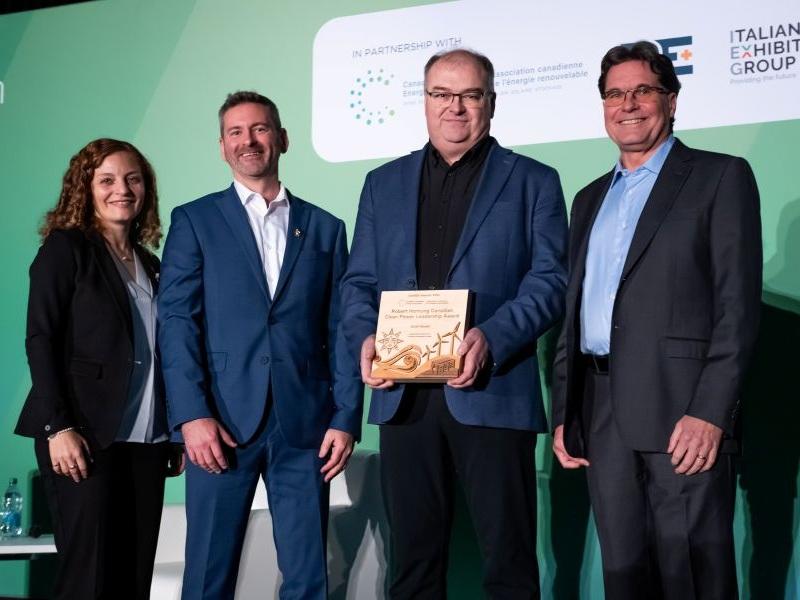
- Scott Harper, CEO of the Wind Energy Institute of Canada (WEICan), for the Robert Hornung Canadian Clean Power Leadership Award.
“Canada needs affordable wind, solar and energy storage to power our future, and this year’s winners are showing how to build it,” said Vittoria Bellissimo, president and CEO of CanREA.
Indigenous Clean Power Company of the Year
Aurora Renewables is a collaboration between the Des Nedhe Group, the economic development corporation of Saskatchewan’s English River First Nation, and Extropic Energy. The company provides integrated solutions for solar power, energy storage, microgrids, electric vehicle charging and electricity infrastructure.
One project cited by CanREA is the Descharme Lake microgrid. Built by an all-Indigenous workforce and opened in 2025, it is Saskatchewan’s first fully integrated microgrid that combines solar power, battery storage and back-up diesel generation to provide year-round power to the Descharme Lake community.
Over a year, approximately 80 per cent of power generated by the microgrid each day is from the sun, with excess solar energy stored in the batteries. The diesel generators only activate when battery energy is low.
"We’re honoured to receive this recognition from CanREA," Jonathan Palmer, vice president of Aurora, said in the announcement of the awards. "Aurora was built on the belief that communities should own the energy infrastructure that powers them, and that the jobs, skills and revenue it creates should stay at home.”
Robert Hornung Canadian Clean Power Leadership Award
Harper has led WEICan since 2007, overseeing the Tignish, P.E.I.-based non-profit’s research, development and education initiatives in wind energy. Its work includes improving grid stability and examining how environmental and technical factors affect wind turbine service life.
Among Harper’s achievements are building WEICan’s Wind R&D Park on Prince Edward Island into one of the world’s most heavily instrumented wind research facilities, CanREA said. There, wind turbines and assets such as solar panels, a battery energy storage system and a climate station are monitored, Harper said in an email exchange with Sustainable Biz Canada.
Data from the park is supplied to WEICan’s stakeholders and collaborators to clarify how the devices operate and better address operational and maintenance challenges.
Harper is also the founder of the Canadian Wind Energy Research Network, and has mentored over 50 students and interns.
“It is quite humbling,” he said about his award. “Our institute is small, so getting recognized during an event with over 3,000 attendees is a bit daunting.”
WEICan looks to expand its role in the wind energy sector with new infrastructure and renewal of past collaborations, Harper added.
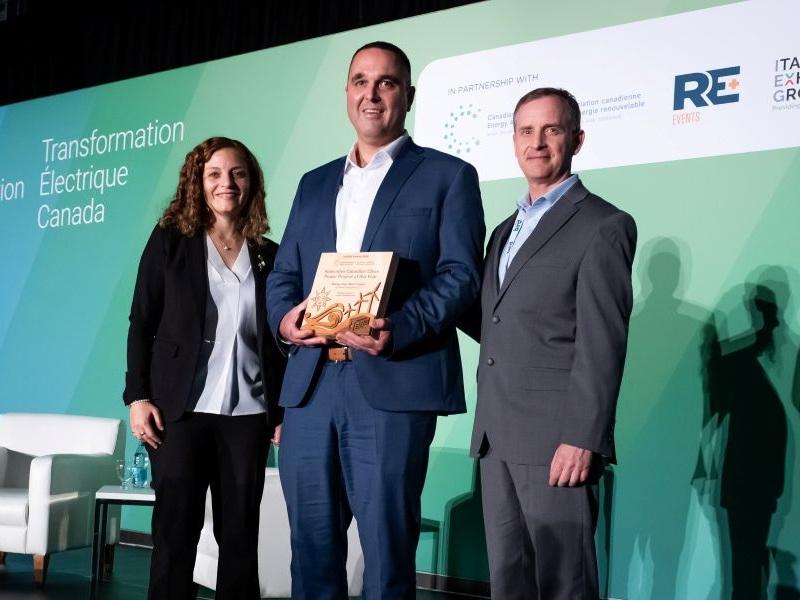
Canadian On-Site (BTM) Project of the Year
The IISD Experimental Lakes Area is a “natural laboratory” for 58 small lakes and their watersheds in northwestern Ontario.
To power its off-grid research facility, IISD installed a microgrid combining solar generation and battery storage. The system can supply up to 80 per cent of the site's electricity needs.
The installation is expected to offset approximately 80,000 litres of diesel and more than 200 tonnes of carbon emissions each year.
Innovative Canadian Clean Power Project of the Year
The Mersey River Wind Project, developed by Halifax-based Roswall Development and Renewall Energy, is a 148.5-megawatt installation in Nova Scotia.
Designed to power about 50,000 homes, the project is supported by what CanREA describes as Nova Scotia’s first retail renewable electricity licence. The licence allows 32 commercial and industrial customers to directly purchase wind energy.
Such a model can help attract long-term investment in wind energy, CanREA said.
“This award brings national recognition to an approach that expands customer choice and opens a new path for renewable energy development," Dan Roscoe, president of Renewall and CEO of Roswall, said.




 Industry Events
 Locations

