
 Locations






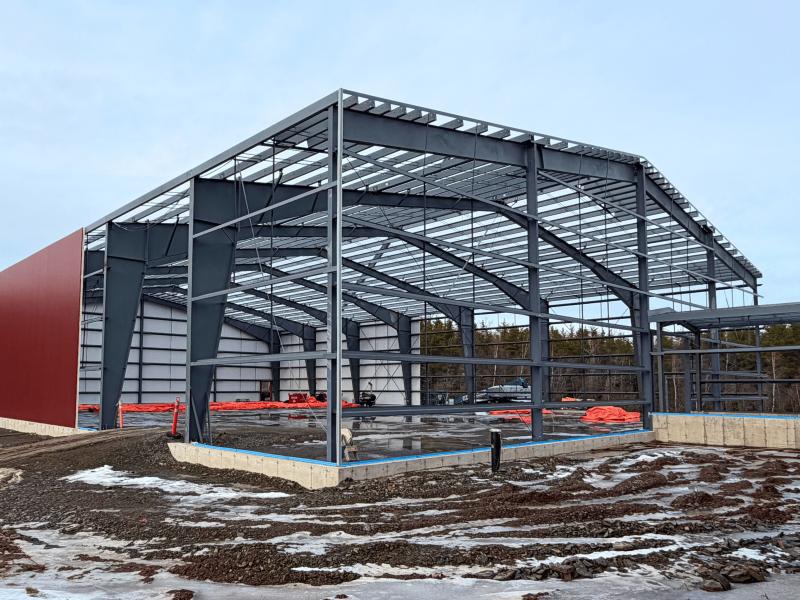
Maritime Geothermal Ltd. is expanding its manufacturing site in Petitcodiac, N.B., as an increasing number of Canadians turn to electric heat pumps to meet their heating and cooling needs.
The designer and maker of Nordic brand residential and commercial heat pumps is adding an additional 15,000 square feet of space to its 30,000-square-foot facility. Expected to be finished by the end of February, the expansion is designed to double its manufacturing capacity within two years and support 40 per cent more staff in the next two to three years.
“We cannot keep up with demand in our current space,” Jordann Kaye, Maritime’s director of marketing, said in an interview with Sustainable Biz Canada. “We need to have more space to build the heat pumps, and we need to have more space to store both the parts to build the heat pumps and then the built units.”
Greater awareness of the benefits of heat pumps has propelled the business forward, Kaye said, specifically their high energy efficiency and the ongoing transition from fossil fuels to electricity. The Buy Canadian movement has also been a boon for the Petitcodiac-based company, further strengthening the argument for an expansion.
Co-founded in 1983 by Glenn Kaye, the company’s president, Maritime started in a garage where he built home heat pumps. Since then, the company has grown to servicing commercial buildings and manufacturing pool conditioners in an industrial-scale facility.
Maritime's heat pumps
Maritime’s products can be divided into geothermal and air source heat pumps.
A geothermal heat pump, also known as a water source or ground source heat pump, draws on consistent underground temperatures to exchange energy for heating and cooling year-round. An air source heat pump exchanges hot or cold air from the outdoors to cool or heat a building.
On the residential side, its geothermal and air source heat pumps are used primarily in single-family homes with ducted heating and cooling systems, Kaye said. For commercial buildings, its geothermal heat pumps are most commonly used, seen in warehouses, hospitals and nursing homes. Maritime also makes heat pumps for ice rinks and pools.
The air source heat pumps for commercial buildings and homes have been bestsellers as of late due to their high energy efficiency, Kaye said, with its residential geothermal equipment still a popular product.
Maritime’s products are sold Canada-wide with the U.S. as a secondary market, Kaye said. Atlantic Canada is the company’s biggest market, but Maritime maintains a strong presence in Alberta, British Columbia and Ontario.
The company’s sales over the last 20 years have been “a roller-coaster ride” as Kaye described, because of economic ups-and-downs and changes in government rebates. But in the last five to 10 years, a “critical mass” was reached for the public’s understanding of the benefits of heat pumps, she added.
“Over the last four years we’ve seen so much demand for the product(s) that we absolutely cannot keep up with how many requests that we’re getting.”
The recent friction between Canada and the U.S. over trade and politics has also fuelled an uptick in sales, she noted.
With the additional production and storage capacity from the expansion, Maritime will focus on shortening its order pipeline and growing in its existing markets, Kaye said.
Heat pumps becoming favoured in Canada
Heat pumps have been gaining popularity because the devices run on electricity and not fossil fuels, helping to decarbonize the heating of buildings. In Canada, where approximately 80 per cent of electricity is from zero-carbon or low-emitting sources, heat pumps are a strong option to reduce household carbon emissions from heating and cooling.
The International Energy Agency says heating buildings is responsible for 10 per cent of global carbon emissions.
In New Brunswick, almost half of households had heat pumps as of 2023, according to Statistics Canada data. From 2021 to 2023, the percentage of Canadian households that used a heat pump as their main source of heating grew from six per cent to nine per cent.
While the upfront cost to install a heat pump is typically higher than a gas-powered furnace, Kaye said it can be offset with government rebates in most provinces. A heat pump is generally paid off in five to seven years from the savings on heating and cooling bills, she added.
Maritime plans to launch new products this year, including larger air source units. It also plans to grow in the U.S., but due to its limited supply for now it will focus on its Canadian suppliers.


 Industry Events
 Locations