Locations




Calgary's SkyFire Energy has acquired Cumberland, B.C.-based Hakai Energy Solutions as it expands to reach new Canadian markets and focus on the microgrid sector amid rising demand for electricity and energy reliability.
SkyFire, an installer, builder and maintainer of solar energy and battery storage systems, will combine with Hakai, a contractor specializing in custom solar and energy storage installations and microgrids. The new firm will be united under the SkyFire brand.
SkyFire is the larger of the two with approximately 150 employees. Founded in 2001, it has completed over 8,500 grid-connected solar energy systems in eight Canadian provinces and territories, totalling over 250 megawatts (MW) of solar capacity in operation. Its clients include TC Energy, Enbridge, plus numerous municipalities and First Nations.
Hakai is a company of approximately 50 employees founded in 2011. Its markets are primarily Vancouver Island and communities on the British Columbia mainland. Hakai’s work includes off-grid projects for the Hakai Institute and resorts, plus residential and commercial grid-tied solar installations.
“Hakai really was just a perfect fit for this business . . . Long tenure, values align, it’s a quality contractor, just really good people in that organization,” David Vonesch, president and CEO of SkyFire Energy, told Sustainable Biz Canada in an interview.
The financial terms of the transaction were not disclosed by SkyFire.
Diversifying to new markets
SkyFire first became familiar with Hakai when it hired an employee from the Cumberland company in 2014, which led to an understanding of Hakai’s business, Vonesch said. The two companies met at solar energy conferences, where they were able to build a connection over the years.
By acquiring Hakai, Vonesch said he is aiming to create an employee-owned solar and energy storage engineering, procurement and construction services provider that operates nationwide. SkyFire, which operates primarily in Alberta and British Columbia, gains the resources to focus on new Canadian markets with the acquisition.
“That diversification into new markets geographically has been a key part of our success historically and we see that as as key aspect of our success going forward,” Vonesch said.
SkyFire will take some time to bring Hakai under its branding, he said. As Hakai built years of goodwill and reputation under its name, SkyFire is looking to find “creative ways to honour that.”
Joining SkyFire “allows us to accelerate the transition to renewable energy and extend the reach of clean, dependable power throughout Western Canada,” Jason Jackson, CEO of Hakai, said in the announcement.
Gaining from each other’s expertise
Another benefit of the transaction is the opportunity for both companies to learn from each other.
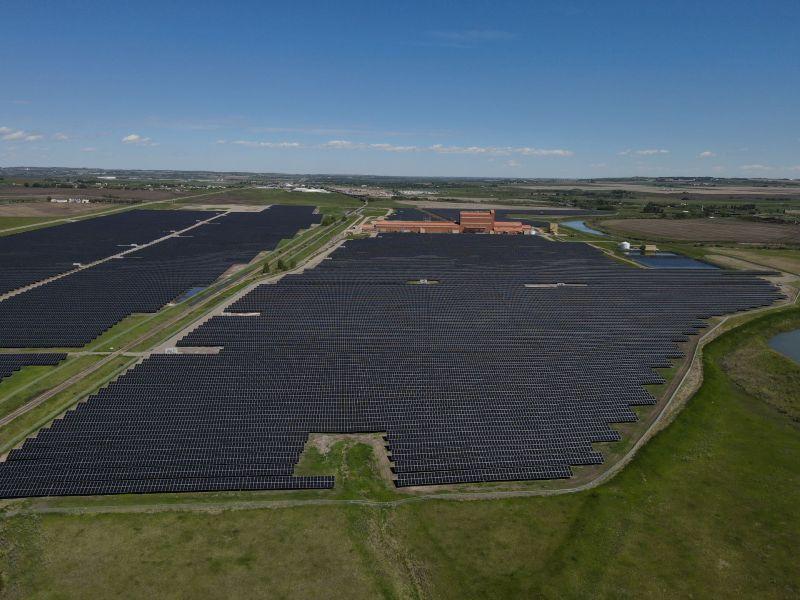
SkyFire will be able to extend its engineering expertise with larger solar projects to Hakai’s markets. The largest project SkyFire has handled to date on its own is a 17 MW installation, and 100 MW with a joint venture partner. Hakai’s largest so far is comparatively small at approximately one MW.
On the flip side, Hakai can share with SkyFire its expertise in off-grid and microgrid systems and energy storage projects.
While SkyFire has worked on off-grid solar projects since its founding, the company did steer away for a time because there was more opportunity in grid-linked projects, Vonesch said. However, with rising interest in combined solar and battery storage projects in the residential, commercial and industrial sectors because of increasing demand for backup power and electricity, SkyFire opted to return, he continued.
The Canadian solar energy sector is growing, Vonesch said. While there are some exceptions to the growth, such as political headwinds in Alberta to renewable energy development, he pointed to bright spots in British Columbia, Quebec, Ontario and the Maritimes for development of large utility-scale solar projects.
“Policy and politics can change the pace and the timing, but economics will win the day,” Vonesch said. “That’s what we’re seeing. The cost of solar has come down so significantly.”




 Industry Events
 Locations