
 Locations








The Université du Québec à Montréal (UQAM) and the Canadian Institute of Actuaries are teaming up to better understand climate-related risks for insurers and investment firms on a warming planet.
The organizations are collaborating on a research project named Modelling climate-related risks with statistical and climate models for Canadian financial institutions. The goal is to develop tools that help actuaries calculate and model the physical and transition risks of climate change on financial institutions.
The tools could help financial institutions forecast and reduce exposure to climate-related risks, such as stronger natural disasters or policies pushing the Canadian economy toward decarbonization.
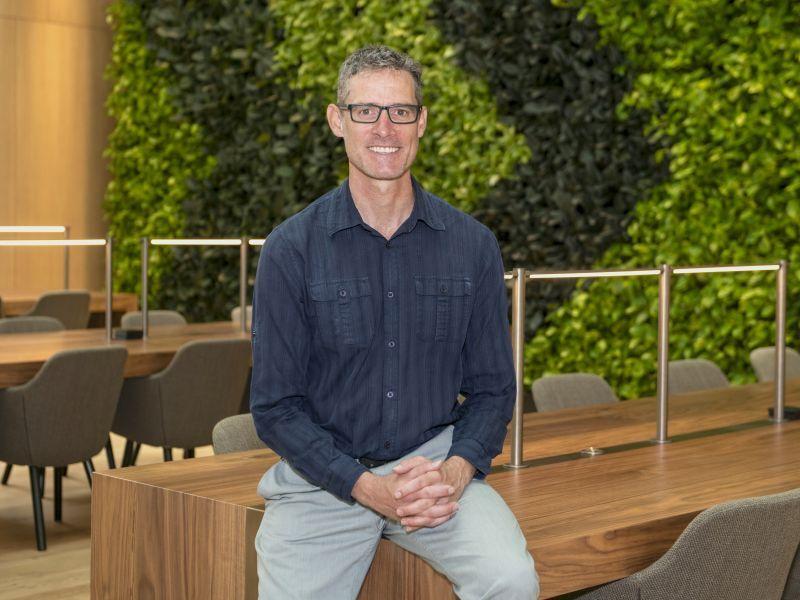
“Eventually it might lead to different standards of practice, educational notes, research,” Mathieu Boudreault, the Research Chair in Actuarial and Climate Sciences and a mathematics professor at UQAM, said in an interview with Sustainable Biz Canada.
The Canadian Institute of Actuaries (CIA) is the qualifying and governing body for the profession in Canada, based in Ottawa. Its role in the project is to “make sure that we have this ongoing connection between the science and the profession,” Boudreault explained.
Bridging the industry and the science
Institutional investors such as pension plans look to plan their investments decades ahead, which requires modelling scenarios of asset returns. Global warming could upend those models from more powerful or frequent natural disasters such as wildfires, floods and heat waves, and the shift to a low-carbon economy.
In response, pension funds like La Caisse began divesting from fossil fuel assets because of the unclear prospects for the industry with decarbonization. Insurance companies may need to consider new risk factors such as air pollution and heat risk into their underwriting.
But many of the tools to measure physical risk, such as mandatory flood maps, may not meet the regulatory requirements of financial institutions today, Boudreault said. Thus, an ongoing discussion between academia and the industry to lay out what the industry needs is needed, he continued, which UQAM and the CIA aim to foster with the research.
The five-year project will be focused on Canada at first. There is also interest in its expanding its reach to the U.S. It could even cover the world if there is enough demand and time, Boudreault said.
The plan is to publish research papers and hold conferences and webinars over the years to publicize the findings.
The research project is being funded by over $1 million in grants from the Natural Sciences and Engineering Research Council and over $500,000 from UQAM’s Research Chair in Actuarial and Climate Sciences. The chair is funded by insurance companies Co-operators, Definity and Intact.
How Canadian financial institutions are responding to climate change
There are warning signs that climate change is already affecting Canada’s economy. The Insurance Bureau of Canada reported insured damage caused by severe weather events exceeded $2.4 billion in 2025, and set a record in 2024 at $8.5 billion in damages.
Canada’s annual insured losses due to catastrophic weather events and wildfires between 2006 and 2015 amounted to $14 billion, adjusted for inflation. Between 2016 and 2025, annual insured losses from weather events and wildfires totalled $37 billion.
Damage at such levels harms the profitability of the insurance industry, Boudreault said. As a consequence, some insurance companies may opt to quit covering certain areas due to the elevated risk. For example, if certain housing markets are found to be at high risk of wildfires, insurers may exit those areas and leave them with no coverage.
Intensifying weather events demand a rethinking of “how we build, plan and restore communities across our country,” Celyeste Power, the president and CEO of the Insurance Bureau of Canada, said. “The best way to keep communities safe and insurance widely available and affordable is to invest seriously in resilience now.”
For example, as governments in Canada plan a massive build-out of housing, Power urged investment into flood resilience, adopting land-use planning rules which ensure homes are not built on flood plains, and changing building codes.
Co-operators, a Guelph, Ont.-based insurance and investment company, took measures to prepare communities for climate change such as forest management practices to reduce the risk of wildfires and stormwater management improvements for housing in flood-prone watersheds.
Canadian pension funds have been including climate risk in their investment strategies, such as taking steps to reduce carbon emissions in their portfolios and measures to understand physical risk on their assets.


 Industry Events
 Locations