
 Locations





Aduro Clean Technologies Inc. (ACT-CN) plans to site its scale-up facility in a Dutch industrial park, where it looks to process thousands of tonnes of plastic waste for recycling and reuse.
Based in London, Ont., Aduro announced in late January it selected the Chemelot Industrial Park in the Netherlands for the facility, which it calls its first-of-a-kind plant. It was referred to as a demonstration-scale plant in a previous release.
There, the company intends to deploy its Hydrochemolytic Technology (HCT), which can transform plastic waste into a reusable liquid form. Aduro plans to start by taking in approximately 10,000 tonnes of plastics per year, and converting around 90 per cent into feedstock.
It then plans to increase the processing capacity as it moves toward commercial operations.
“We are going to show the world that it works, and we do it on the real scale,” Eric Appelman, Aduro’s chief revenue officer, told Sustainable Biz Canada in an interview about the process underpinning the scale-up facility.
Demonstrating its technology
Founded in 2011, Aduro’s team developed HCT, a process of breaking down long carbon chains in water through chemical catalysts. The technology “allows you to create value out of low-value materials,” Appelman said.
The company initially oriented HCT around making bitumen pumpable, then converting vegetable oils to fuel. In 2020, it looked at the opportunity to upgrade plastic waste, which became its main focus.
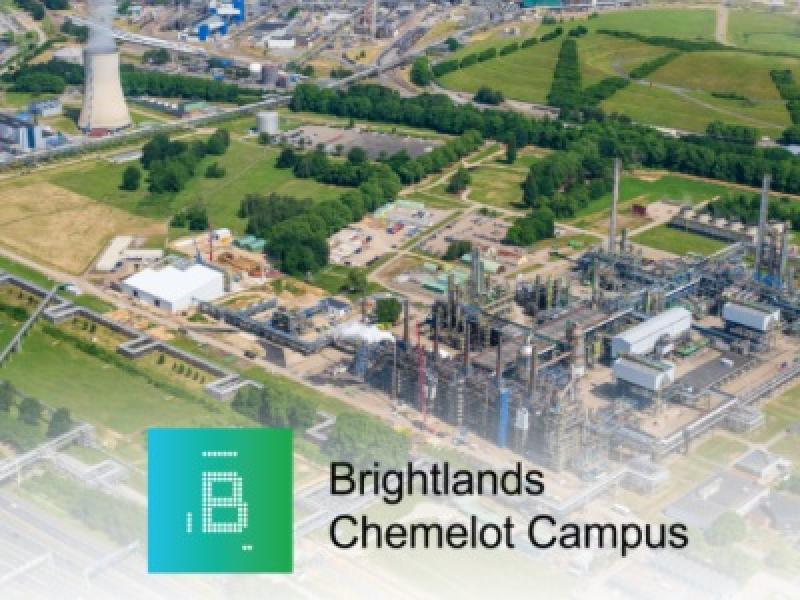
Since finishing laboratory tests in London and developing a “successful” pre-pilot facility, Aduro moved to develop what Appelman called a “model of a fully continuous commercial plant” in the Chemelot Industrial Park. The 800-hectare industrial park is a hub for the European chemical industry, with infrastructure such as shared utilities and centralized wastewater treatment.
Aduro’s plan is to turn common household plastics such as polyethylene, polypropylene and polystyrene into a liquid that resembles gasoline or diesel. The output is expected to be sold to naphtha cracker operators to be remade into plastics, supporting the circularity of the plastics industry.
Aduro plans to demonstrate “all the principles of our process” in the first-of-a-kind facility in 2027 as it aims to ramp up to commercial-scale quantities over time.
A timeline for the project's scale-up could not be provided by Appelman. Aduro “will try to move fast,” and aims to be on time for the expected ramp-up in demand, he added.
Appelman also would not disclose the cost of developing the scale-up facility, but noted its construction was supported with a US$20-million public offering Aduro announced in late 2025.
Developing or licensing HCT
Aduro chose the industrial park for several reasons.
The first is the well-developed waste collection system in the Netherlands, which is more advanced compared to Canada. It enables easy access to the “right quality of waste,” Appelman said.
The second reason is the presence of steam crackers in the industrial park, which are better suited to Aduro’s process. In North America, gas crackers tend to dominate.
Third, the Chemelot Industrial Park is already permitted for industrial properties and offers the potential for subsidies.
Fourth, and most important, are the regulations. The European Union’s Packaging and Packaging Waste Regulation attempts to foster a more circular economy for plastics, which “is creating a market” and demand for Aduro’s service, Appelman said.
Aduro may develop and own more industrial facilities if it becomes “financially interesting” to the company, Appleman said. HCT offers “attractive financial conditions,” which support the use case for its deployment, he explained.
The company could also pursue a licensing model, giving other companies the right to use its technology.
Appelman envisions there could be hundreds of facilities using HCT close to large population centres around the world.


 Industry Events
 Locations