
 Locations





Carbon Upcycling Technologies' new CEO Markus Kritzler says he is juggling a number of priorities as he settles into his role. Chief among them are scaling the company's low-carbon cement substitute technology for the world stage, and filling out the team of people who can help accomplish that.
Kritzler is the Calgary company's former chief revenue officer. He was appointed to the top role to replace co-founder Apoorv Sinha, a move announced in February.
Before joining Carbon Upcycling, Kritzler was a senior figure at Holcim Group, a Swiss building materials company that ranks among the largest in the world. He oversaw Holcim’s merger with Lafarge and its global strategy for cement and concrete, a background that will come in handy in his new job.
In an interview with Sustainable Biz Canada, Kritzler listed his current priorities: commissioning the company's Carbon 1 Mississauga facility in Ontario this year; bringing projects in North America and Europe closer to fruition; and forming a strong leadership team.
“What really differentiated Carbon Upcycling when I was looking at it is, first of all, they’re not trying to reinvent the wheel and completely disrupt industry,” he said. The company's technology allows for significant decarbonization of the cement and concrete sector “without attempting to completely break the system."
Kritzler's background
An industrial engineer by education who was born and raised in Mexico City, Kritzler started his career in the ceramics business. Then the world of finance came calling. He finished an MBA in the U.S. and transitioned into a private equity job in the renewable energy industry, then mergers and acquisitions advisory for an investment bank.
After some years, Kritzler was antsy for a change — “I wanted to have a little bit more global exposure.” He was hired by Holcim for a corporate strategy position in Switzerland.
At Holcim, he oversaw its international cement and concrete business while managing a multibillion-dollar budget. He also played a pivotal role in negotiations and planning for Holcim’s merger with Lafarge. After his stint in Holcim, which ran from 2011 to 2016, he returned to Mexico to be the managing director of investment firm Ingenia Capital.
In 2025, Kritzler got a call from Carbon Upcycling. He was attracted to its way of decarbonizing the cement industry, which contributes approximately eight per cent of the world's greenhouse gas emissions.
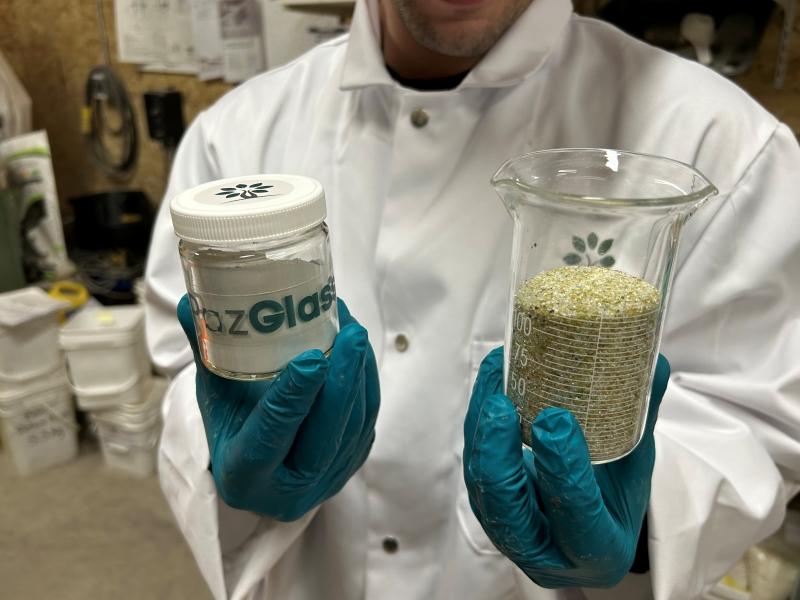
Carbon Upcycling’s technology outputs a cement substitute known as supplementary cementitious material (SCM) by exposing industrial wastes such as ashes or steel slag to carbon dioxide captured from industrial sites. It is a “fairly simple” technology which the cement industry can be comfortable with, Kritzler explained.
The company’s staff also stood out to him. Kritzler called Sinha an “amazing” person with a strong vision, and said the rest of the team has “unique expertise worldwide.”
Kritzler's priorities
When Kritzler became Carbon Upcycling’s chief revenue officer in April 2025, he joked he had “zero responsibilities” because the young company was not producing much revenue. To develop that revenue, however, he got busy developing partnerships with large cement industry players to deploy its technology at scale.
“This was talking with most, if not all, of the cement majors and trying to work and co-develop with them (a) cement strategy that allows them to grow.”
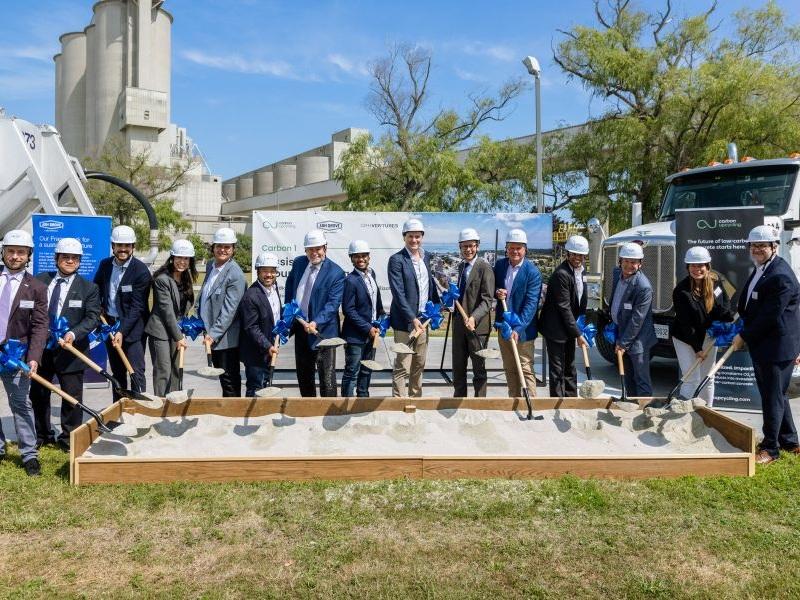
As CEO, his priorities include commissioning the company's first-of-its-kind facility in Mississauga this year, which is located at Ash Grove's cement plant. It is expected to operate at full-scale, which means producing SCMs with no interruptions.
The project is expected to initially produce 34,000 to 36,000 tonnes of SCMs per year. Carbon Upcycling then plans to upgrade its capabilities to push out 120,000 tonnes of SCMs per year.
Outside of Canada, Kritzler will oversee development of a demonstration project in Italy he expects will “unlock a huge pipeline for us.” The demo is designed to churn out 5,000 to 10,000 tonnes of SCMs per year, and is expected to begin operating in mid-2026.
Kritzler will also plan the development of three larger projects: two in the U.S., one in Europe. Carbon Upcycling is in an advanced engineering phase for the facilities, which are designed to produce 250,000 to 300,000 tonnes of SCMs per year. Construction is expected to start in late 2026 to early 2027, he said.
Carbon Upcycling is keeping the door open for projects in Asia and South America as well, Kritzler said. It has already built relationships in Thailand, South Korea, Australia, Peru and Mexico.
His fourth objective as CEO, which Kritzler said is "the more important one," is to build an engaged team with the right people in the right positions while he removes as many obstacles as possible from their paths.
The company will be unveiling “impressive people” who have been recruited in the coming months (such as its new CFO Suzy Taherian) and continuing to broaden the kind of feedstocks its technology can be compatible with, Kritzler said.



 Industry Events
 Locations