
 Locations




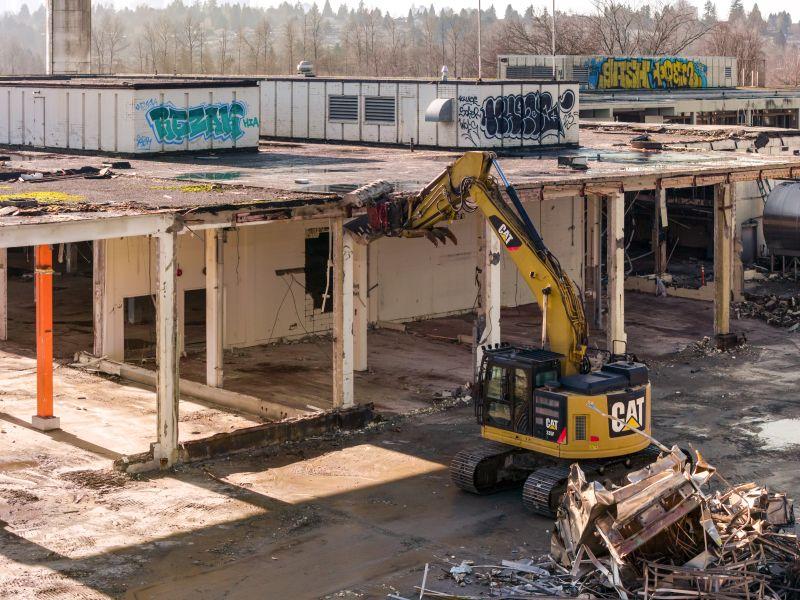
The deconstruction of a former Saputo facility in Burnaby, B.C. could supply the materials to help build a key part of a planned district energy system.
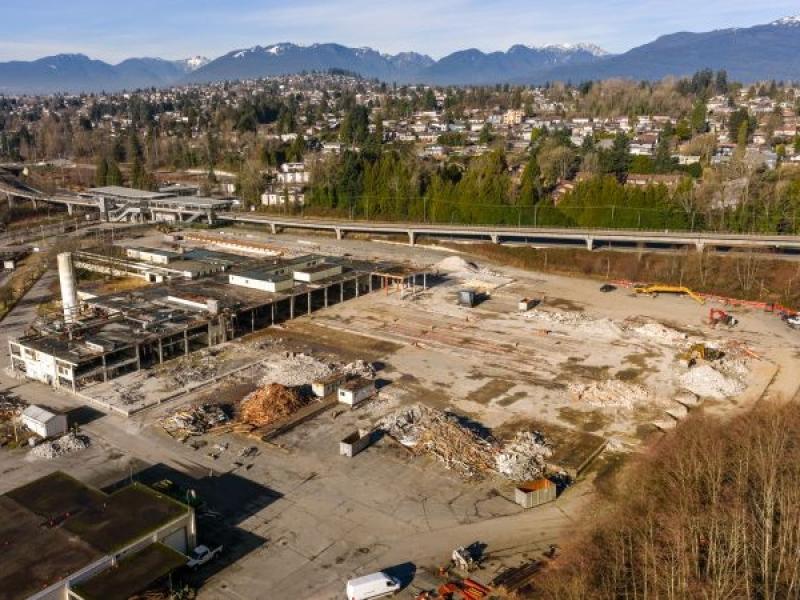
Located on a property owned by Vancouver-based developer Peterson Group, the 215,000-square-foot building used to be a dairy processing site. It is being dismantled in an effort to instill circularity and sustainability into Peterson’s operations.
Almost 226 tonnes of Douglas fir lumber, timber and glulam beams may be repurposed to build homes and part of an energy centre next to the local Waste-to-Energy Facility. The energy centre is one link in a grand plan to build a district energy system capable of servicing up to 50,000 homes in Metro Vancouver with heat and hot water.
“When the market conditions are like this, it gives us the ability to take pause and not have to focus on the bottom line,” Barrett Sprowson, senior vice-president of residential projects at Peterson, said in an interview with Sustainable Biz Canada.
Additionally, the deconstruction will clear the way for Peterson’s Blake Village, a master-planned community of approximately 5,500 condo and rental units, four acres of trails and green space, and 200,000 square feet of commercial space.
Project's economics, sustainability make sense
When Peterson was first presented with the deconstruction project, Sprowson said there was an air of caution because there were questions about the financial viability and whether it would slow the development of Blake Village.
As it embarked on the process, Peterson discovered the deconstruction project was worth doing. It aligned with the company’s commitment to sustainability and could be undertaken without making “a dramatic impact on the actual timeline,” Sprowson said.
“By planning for it and bringing in that deconstruction group early in the planning stages, we were able to actually get through the process without a negative impact on the timeline.”
The break-down of the site is being handled by local firm VEMA Deconstruction, a company specializing in materials recovery and reuse.
The deconstruction started in January and is anticipated to be completed by the end of March. So far, it has “been really smooth," Sprowson said.
The buildings and construction sector is a large contributor of material waste and greenhouse gas emissions. In 2021, Delphi Group calculated one-third of the solid waste in Canada is generated by the construction sector. The UN Environment Programme estimates the sector is responsible for 37 per cent of global carbon emissions.
By using the recovered lumber, timber and glulam beams, Metro Vancouver can reduce the embodied carbon of its energy centre and keep tonnes of lumber out of landfills.
While the environmental benefits stand out, Sprowson said Peterson also benefits financially from the project. Peterson is offsetting some of the deconstruction costs by selling the building materials.
The project “puts another little check mark . . . towards making it more feasible,” he said.
For other developers interested in similar deconstruction endeavours, Sprowson recommends taking “the time to look under every rock and see if there’s an opportunity to meet your goal and get a financial benefit.”
Could help build a district energy system
Metro Vancouver “has been in talks with Peterson about potentially using salvaged wood,” Paul Henderson, Metro Vancouver's general manager of solid waste services, told Sustainable Biz Canada in an email exchange. He noted the “idea is in early stages, with more study on feasibility to be done.”
Construction on the energy centre is starting this year and is expected to continue through 2028.
Metro Vancouver plans to build a district energy system to recover over three times the energy from the Waste-to-Energy Facility when fully built out with the energy centre and connections to the River District, Metrotown and Edmonds neighborhoods
Steam from the Waste-to-Energy Facility will be directed to the energy centre for conversion into hot water. The hot water will be transported through kilometres of underground piping to local communities.
At full capacity, it is projected the district energy system could reduce regional greenhouse gas emissions by up to 70,000 tonnes per year by offsetting the use of natural gas.



 Industry Events
 Locations