Locations
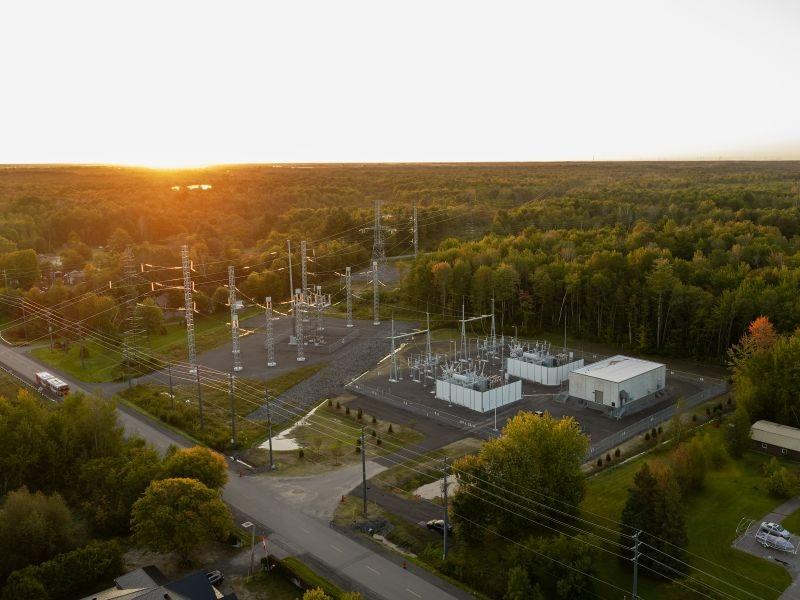
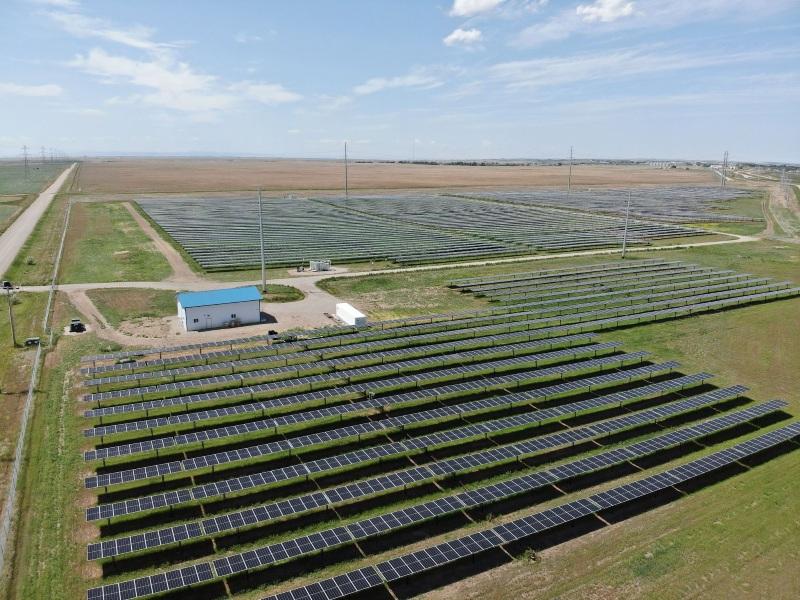





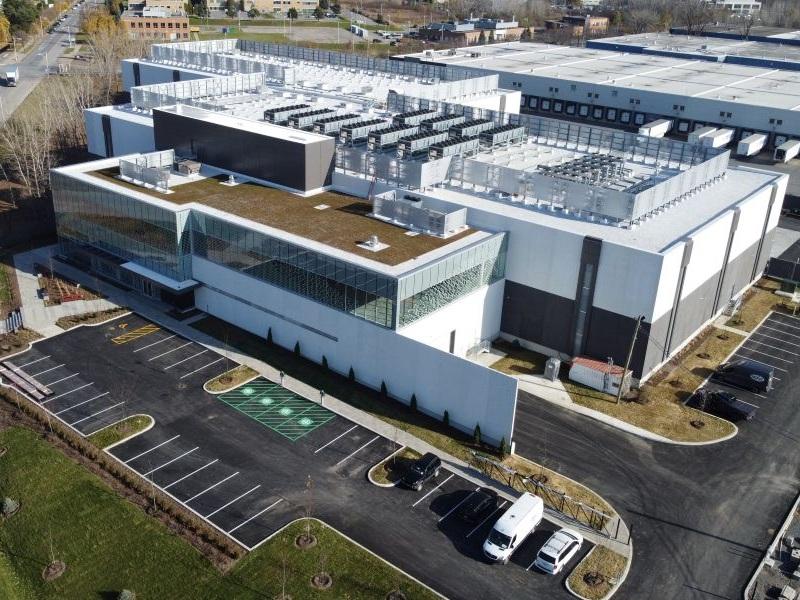
As data centres face growing public scrutiny over their environmental footprint, Cologix was able to increase its energy and water efficiency in 2025, the colocation data centre operator said in its sustainability report for the year.
Cologix is a Denver, Colo.-based company with significant operations in Canada. It operates a network of over 45 data centres in North America that have over 210 megawatts of compute power, with 23 in Canada. Cologix’s clients include Rogers, Google, Amazon Web Services, IBM and Microsoft Azure.
Outcry over the ever-escalating electricity consumption, water use and greenhouse gas emissions associated with data centres has put the buildings under more criticism than ever. It is an “interesting time with the public sentiment,” Page Haun, the chief marketing and environmental, social and governance strategy officer of Cologix, said in an interview with Sustainable Biz Canada.
The impact of its data centres is an issue the company has been addressing for years, she said. “We’ve been focused on better usage of water, power efficiency as a part of how we (operated) for a long time.”
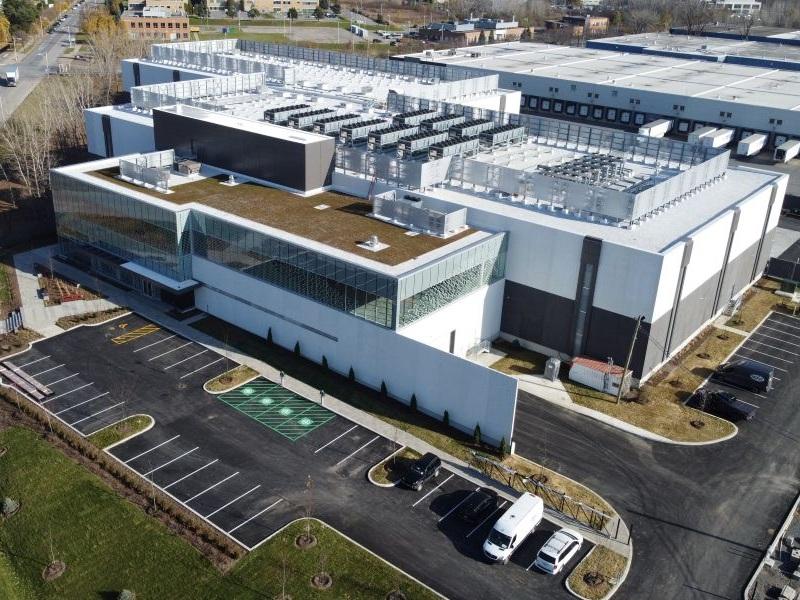
In its 2025 sustainability report released in August, Cologix summarized its continuing work to increase its energy efficiency, keep water use below the industry average and draw upon 99 per cent carbon-free electricity in Canada. Its first LEED Gold-certified data centre, MTL8 in Montreal, opened last year.
However, Cologix reported increased carbon emissions from a growing data centre footprint, a challenge of balancing business growth while aiming to meet its environmental ambitions.
Energy and carbon use
Through steps such as upgrading older sites with more efficient uninterruptible power supply systems and bringing new, energy-efficient data centres online like MTL8, Cologix saw its power usage effectiveness (PUE) improve. PUE, a metric to measure energy efficiency, improved from 1.486 in 2024 to 1.42 in 2025.
Cologix’s use of renewable energy ticked up from 46 per cent in 2024 to 48 per cent in 2025. Likewise, its consumption of carbon-free energy increased from 65 per cent to 67 per cent. Bringing data centres online in Canada helped Cologix with the two metrics, Haun said, because of low-carbon grids in provinces like Quebec.
Cologix’s water use effectiveness (WUE), a measure of water efficiency, improved by more than 22 per cent in 2025, reaching 0.157 litres per kilowatt-hour. Cologix’s WUE is 91 per cent lower than the global industry average, the company said.
“We don’t have the huge, mammoth data centres” that consume massive volumes of water, Haun said. Cologix’s data centres are small- to medium-sized and are typically are equipped with closed-loop water systems to minimize water intake, she explained.
Growing square footage and carbon emissions
Despite the progress on energy use, Cologix’s carbon footprint grew from 2024 to 2025.
While its Scope 1 emissions fell eight per cent to 740 tonnes of carbon dioxide equivalent (tCO2e), its location-based Scope 2 emissions rose 41.5 per cent to 126,591 tCO2e. Its Scope 3 emissions rose by 43.7 per cent to 119,035 tCO2e. Cologix’s carbon intensity rose over the same period from 0.03 tonnes of carbon per square foot of management to 0.04.
Adding new data centres in markets that have limited access to carbon-free power and growing the business with more hires and equipment purchases were responsible for the increased emissions, Haun said.

As part of its refreshed 2030 sustainability roadmap, Cologix said it will focus on emissions intensity over absolute emissions, as absolute emissions reduction targets “can become unrealistic” under rapid growth. Cologix aims to keep its emissions intensity to a target of 0.04 tonnes of carbon per square foot of management or lower under the new roadmap, Haun said.
“We know that we can have impact and have a positive result.”
In its original 2030 sustainability roadmap, Cologix set out to achieve carbon neutrality across Scope 1 and 2, power its facilities with renewable energy and calculate its Scope 3 emissions.
While the company is working to curb its Scope 1 and 2 emissions, Haun said it does not have a specific date when it anticipates being carbon neutral. Cologix aims to expand its tracking of Scope 3 emissions and further refine its accuracy, Haun added. The company plans to establish a target for its Scope 3 pollution over time, she said.
On the path to its new 2030 roadmap
Other parts of its 2030 roadmap are:
- to ensure Cologix facilities can provide carbon-free energy options to its customers;
- maintain a WUE at or below 0.25 litres per kilowatt-hour across its facilities; and
- have all new construction projects incorporate embodied carbon considerations.
To shrink its embodied carbon, Cologix plans to follow the LEED Silver standard for its data centre designs and work with its vendors to better understand where embodied carbon can be cut, Haun said.
“We’re always looking to find new ways that we can be even more sustainable and more responsible to the communities where we operate,” Haun said.



 Industry Events
 Locations