
 Locations






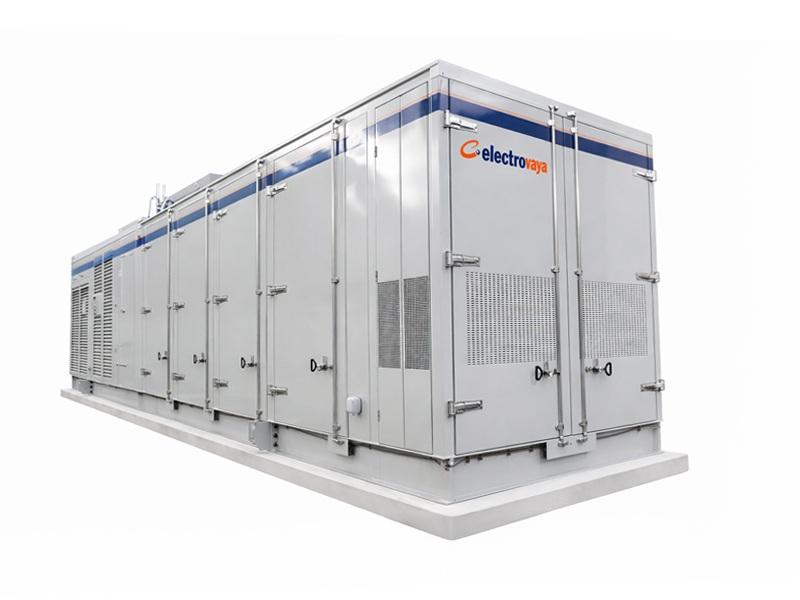
Battery technology and manufacturing firm Electrovaya Inc. (ELVA-T) has released an energy storage system for data centres called ElvaPulse 1500, which CEO Raj DasGupta called a game changer for the Mississauga-based company.
The first product to be released under its ElvaPulse stationary energy storage product line, the 1500 model is built in a 20-foot container. Having up to 2.88 megawatt-hours of capacity, it can be adjusted to dispense up to approximately seven megawatts of continuous power.
“I don’t think there’s another type of similar device which can do that,” DasGupta said in an interview with Sustainable Biz Canada.
The ElvaPulse 1500 is designed to handle large increases and swings in power demand, he said, which are straining grids and on-site power generation for data centres. Most battery energy storage systems paired with data centres are designed to be charged and discharged relatively slowly, DasGupta continued. By contrast, Electrovaya is offering a more powerful product.
Hybridizing big buildings
Data centres are the main market for ElvaPulse 1500. However, DasGupta sees it matching the needs of power-intensive industrial applications such as food processing and warehouse operations.
The company is in sales discussions with data centre operators and in initial talks with industrial businesses.
For cost per megawatt-hour, DasGupta said ElvaPulse 1500 is likely more expensive than incumbent energy storage options for data centres. But on a cost per unit of power – the megawatt – he believes it will be among the lowest because of the high performance it can unleash.
“In these data centre applications, we believe . . . that is really the measure what they’re looking for,” DasGupta said.
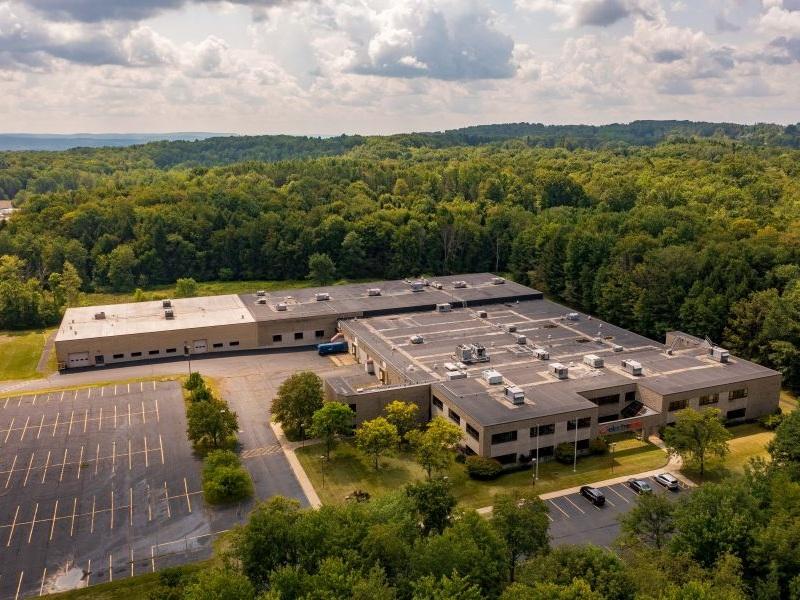
Additionally, U.S. customers can be eligible for investment tax credits as the ElvaPulse 1500 is to be manufactured from Electrovaya’s factory in Jamestown, N.Y. Deliveries of ElvaPulse are expected to be made in Q2 2027, after the Jamestown facility is up and running.
ElvaPulse 1500 can support businesses with energy efficiency, DasGupta said. Many data centres today are facing a shortage of electricity, so their operators are installing carbon-intensive, on-site energy generation like diesel generators and gas turbines, or requesting additional power from the local grid to compensate.
The ElvaPulse 1500 was likened to a hybrid car by DasGupta, which enables a data centre to operate on reserved electricity rather than raise generation demand. This saves on greenhouse gas emissions and costs, and effectively handles the peaks and troughs of power demand, he explained.
ElvaPulse, DasGupta said, “hybridizes big buildings.”
Hope for ElvaPulse to be Electrovaya’s iPhone
Electrovaya has plans to add more products to its ElvaPulse line, DasGupta said. For example, it is developing an 800-volt direct-current system to serve data centres.
A company that focused on batteries for warehouse equipment, automation, defence and heavy industry applications, Electrovaya identified higher-power opportunities like data centres as a growth area, DasGupta said, which can help address the rising costs of electricity over last five years.
“It’s making that hybridization more valuable,” DasGupta said about ElvaPulse.
The start of battery cell production from its 137,000-square-foot Jamestown factory “will represent a paradigm shift in our capabilities as a company,” DasGupta said. In an interview with Sustainable Biz Canada last year, he said the Jamestown site is designed to have double the production value of its facility in Mississauga.
He also anticipates the ElvaPulse line will be as dramatic of a change for the company. Drawing upon the example of Apple, DasGupta said the initial markets for its battery cells could be the equivalent of the iPod for Electrovaya – an early success. But ElvaPulse could be its iPhone, a mega-hit.



 Industry Events
 Locations