


 Locations




GUEST SUBMISSION: Heat pumps are now a standard part of decarbonization plans for existing buildings in Canada, and the equipment itself has improved a great deal. Yet retrofit projects still run into trouble, and in most cases the cause is not the heat pump. It is a question nobody asked until the installers were already on site.
Building owners and property managers do not need to become mechanical designers. They do need to make sure seven questions have clear answers before anyone selects a model or signs a purchase order.
1. Has the load been calculated for the building as it is today?
Many replacements are sized to match the old boiler or rooftop unit, which may have been oversized when it was installed decades ago. If the building has since had new windows, insulation or air sealing, the real heating and cooling load is lower still.
Ask for a current load calculation that reflects the envelope as it is now, or as it will be after planned upgrades. Oversized heat pumps cost more, cycle on and off and control humidity poorly.
2. Can the electrical service carry it?
Replacing gas heat with electric equipment moves load onto the electrical system. Before equipment is chosen, have an electrician or engineer confirm the capacity of the service, the main distribution and the panels that will feed the new units.
If an upgrade is needed, the utility's timeline can be longer than the mechanical work, so this answer often sets the schedule for the entire project.
3. Where will the air and the water go?
A heat pump changes how air moves through a building and it produces condensate, in cooling mode indoors and during defrost outdoors.
Confirm how ventilation air will be supplied once the old system is removed, and where every condensate line will drain. A drain route that depends on a pump, a long horizontal run or an exterior wall in a cold climate deserves a second look, because water damage and ice are among the most common complaints after a retrofit.
4. Where will the outdoor units sit?
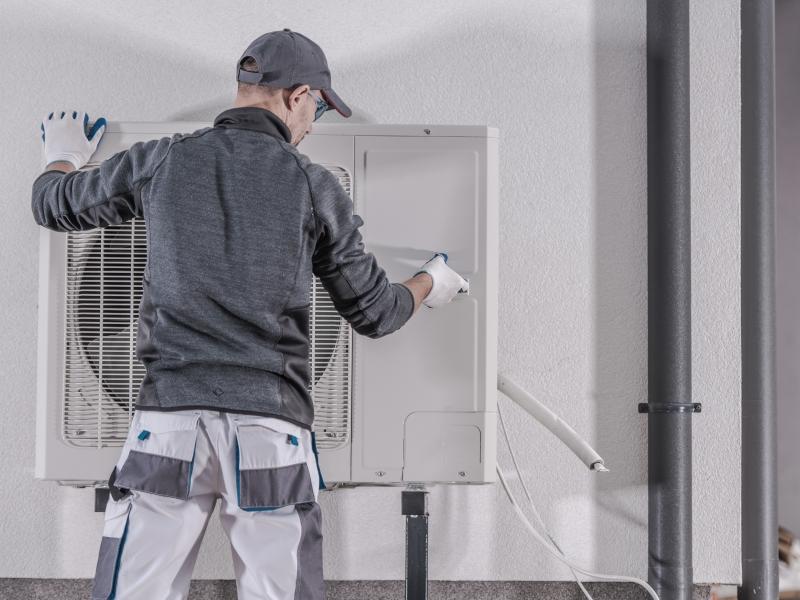
Outdoor units need clear airflow, a structure that can carry their weight, and enough height to stay above snow and drifting. They also make sound and shed meltwater during defrost.
Look at each proposed location for noise near windows and neighbours, for ice forming on walkways below, and for the length of the refrigerant lines back to the indoor equipment. A location that looks convenient on a drawing can fail on any one of these.
5. Can someone service it?
Equipment that cannot be reached will not be maintained. Check that filters, coils and electrical panels can be accessed without removing ceilings or entering occupied suites more than necessary, and that rooftop units can be reached safely in winter. Ask who will hold the service contract and whether parts for the chosen product line are stocked in your region.
6. What happens on the coldest day?
Cold-climate heat pumps keep working well below freezing, but their output falls as the temperature drops, which is when the building needs the most heat.
Decide early whether the design relies on the heat pump alone, on electric resistance backup or on a retained gas system, and at what outdoor temperature the backup takes over. That decision affects electrical capacity, operating cost and emissions, so it should be made on purpose and written down.
7. How will you know it works?
Commissioning is the step most often cut when a project runs late. Require it in the contract. At handover you should receive the load calculation, equipment schedules, control sequences, refrigerant charge records, start-up reports and a maintenance plan. These documents let your operators run the system as designed, and they are what the next contractor will ask for.
Ask early
None of these questions are exotic, and a good design team will welcome them. The value lies in the timing. Each one costs little to answer during planning and a great deal to answer after the equipment has been ordered.
Owners who settle all seven first tend to get the building they were promised: lower emissions, comfortable occupants and no surprises in the first winter.



 Industry Events
 Locations

