Locations




Crushing rocks for mining consumes as much as four per cent of the world’s electricity output. A B.C.-based firm has come up with a process that not only greatly reduces energy usage, but traps carbon dioxide (CO2) in the process.
Rockburst Technologies does not follow the traditional path when it comes to comminution, instead deploying a different method.
“The whole idea was to use nature . . . and the technology works by using CO2 gas to basically break the rocks and mineral ore from within, rather than applying external forces to break the rock,” Oscar Malpica, co-founder and CEO of Rockburst, told Sustainable Biz Canada in an interview.
With this system, dubbed CoreBurst or transcritical CO2 pulverization, the company uses pressurized gas to crush rocks, resulting in a 50 per cent reduction in energy use.
“We use some thermodynamic magic essentially — that secret sauce of our company — for the gas to go inside the rock and at pressure, and then when we quickly depressurize the system, then the gas starts to expand and escape, and it breaks the rock from within,” he said.
“Rocks are . . . 10 to 30 times weaker under tension than they are under compression. Basically, you have less resistance to the breakage, and less resistance translates into less energy to break the rock.”
And in addition to the decrease in energy costs, the company’s method offers another benefit for heavy industry.
“At the moment of breakage, that CO2 gets transformed into carbonates. In other words, that is the chemical process to store and sequester CO2 forever. Essentially, you’re converting CO2 into a rock, so it will never escape into the atmosphere, so this is a two-for-one type of process,” Malpica said.
“This is the one aspect that initially we thought it was like a nice bonus, but now it has become a central value proposition of our technology.”
The Rockburst origin story
The company began operations in 2020 after Natural Resources Canada issued an open innovation competition called the Crush It! Challenge. It was one of six finalists to receive seed funding, according to Malpica.
Today, the company has about 12 employees and operates out of Vancouver.
Rockburst is hoping to provide services to the “extremely conservative” mining industry by offering a value proposition. “Ideally, we would like to offer decarbonization as a service offering: you hire our services and you will obtain for example, green nickel," he said.
The energy savings and the carbon sequestration translates into converting what is a cost centre of the mining industry, the grinding and the crushing, into potentially a profit centre, Malpica said, because the carbon sequestration allows a firm to obtain carbon credits.
Funding from NorthX
The company received a $500,000 non-dilutive investment from NorthX Climate Tech, a catalyst initially funded by the governments of Canada and B.C., as well as Shell Canada. Rockburst will use those funds, as well as a further US$5.5 million in other funding, to build an industrial pilot for its machinery.
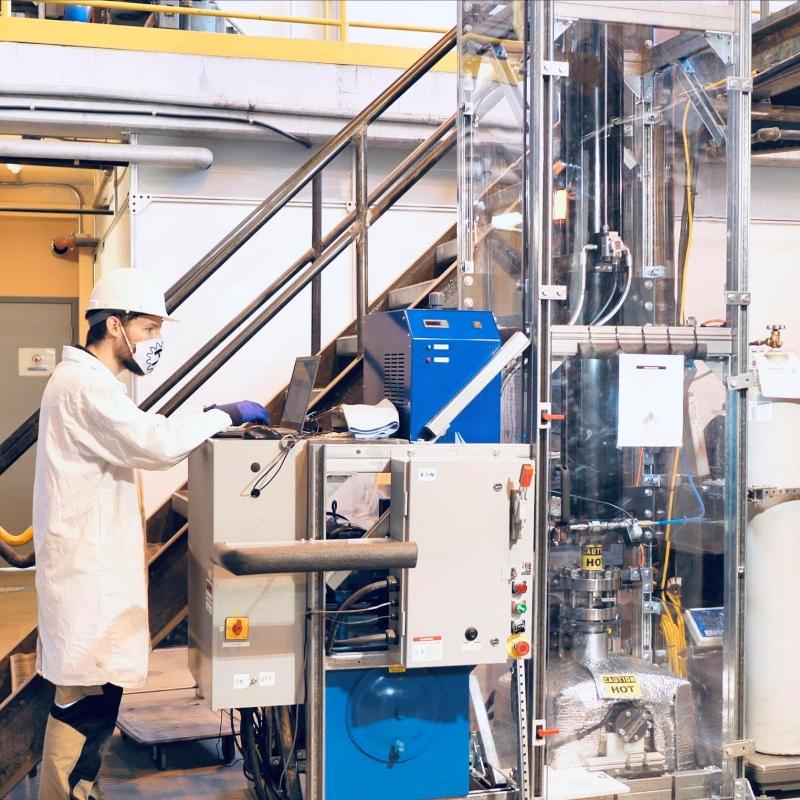
The company has proved its process works by using a shipping container-sized machine to crush mining ore. “But we are working on a continuous process where the similar principle applies. It would just be in a more continuous manner: to feed in the rock, and then injecting the CO2,” Malpica said.
Rockburst is hoping to build this facility in 2026 and 2027, with an eye toward a 2028 opening.
Other applications for the technology

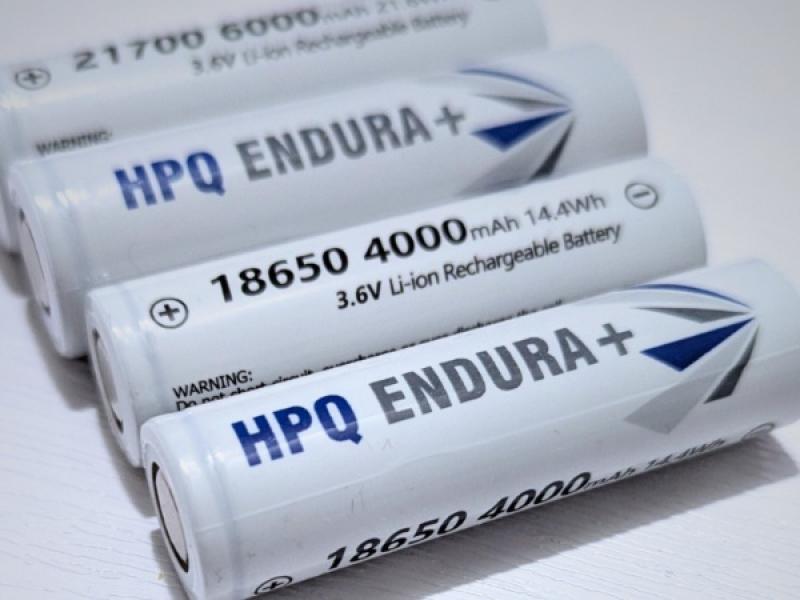
While the mining industry is an obvious main target for the technology, electric vehicle battery manufacturers are another top target because nickel is used, he said.
“We believe they’re better capitalized to invest in this type of project, and they have the sense of urgency to get that green nickel in their batteries.”
Additionally, the cement industry has a “massive sense of urgency to decarbonize one of the most polluting industries in the world right now . . . We definitely fit there,” Malpica said.
If all goes to plan, the firm hopes to tap into a big market. “It’s tremendously huge. We have estimated that just the nickel market just in Canada, we’re talking about $450 million a year.”
Customers of other critical minerals, such as copper and platinum, can benefit from Rockburst's technology as well.
“What obviously the miners know all too well, and society is just starting to realize, is if we want this world to exist and to go beyond 2050, we need this green revolution," Malpica said. "But the green revolution, ironically, will not happen, if not for the supply of critical minerals.”


 Industry Events
 Locations