
 Locations





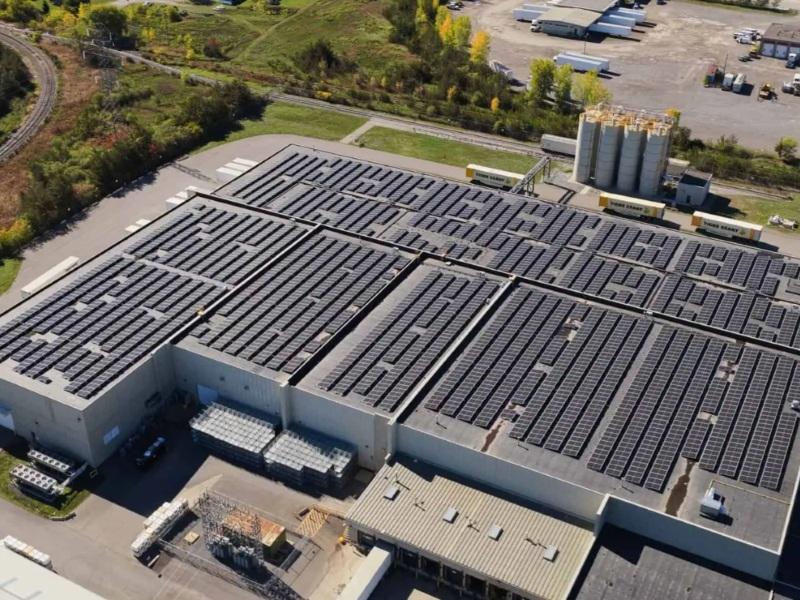
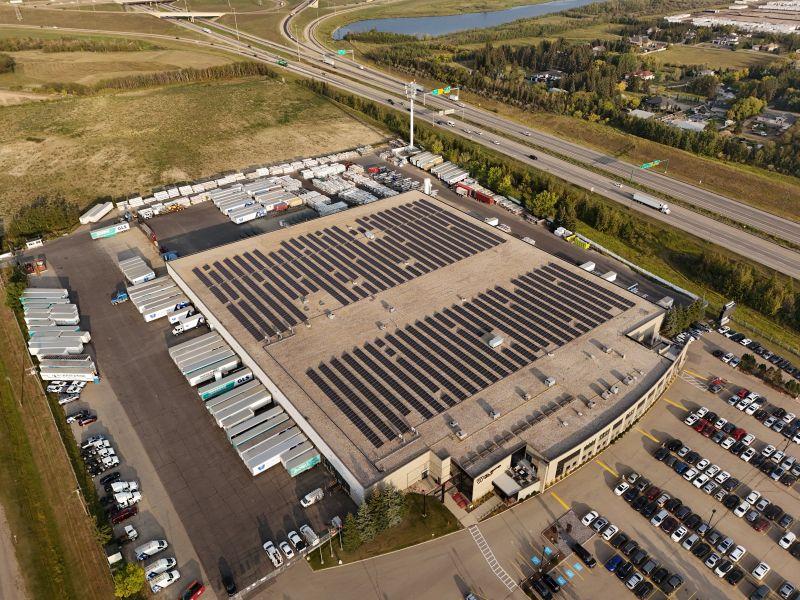
A rooftop solar installation at Schutz Canada Inc.'s Belleville, Ont. manufacturing facility is expected to pay for itself in just over three years, while supplying about one-third of the site’s annual electricity needs.
An array of over 2,700 solar panels atop the 230,000-square-foot building where container systems are made, it is expected to generate enough electricity to save the company over $300,000 per year.
Toronto-based EcoGrid Renewables Inc. a partner on Schutz’s energy transition in North America, was the general contractor for the installation. The firm also designed the array and calculated the anticipated financial impact.
Schutz, a Germany-based manufacturer of industrial packing systems and provider of industrial services, initiated the project to satisfy its environmental mandate, Greg Sommers, president of EcoGrid, said in an interview with Sustainable Biz Canada.
With Ontario’s electricity grid relying more on natural gas generation since the refurbishment of its nuclear fleet was initiated, Schutz’s leadership was concerned about the rising carbon emissions associated with the Belleville facility.
“It really compounded the need in their messaging for, ‘We are forward thinking, we are stewards in our environmental impact and we are always looking for ways to reduce,’” Sommers said.
Schutz’s largest cost savings initiative in 2025
Schutz executives also initiated the installation as a form of risk management. Mindful of economic pressures stemming from the aftermath of the COVID pandemic, decades-high inflation, a trade war with the U.S. and escalating electricity costs, “you have to be looking for ways to mitigate that risk,” Sommers said. Anything that can reduce energy costs is “a big win,” he added.
Solar energy, EcoGrid often finds, “aligns very well with the high cost of demand of electricity,” Sommers said. At daytime, typically when the cost of electricity spikes in Ontario, the array generates the most electricity.
The solar array can be part of the solution as a long-term, consistent power source, Sommers explained, which produces power lower than utility rates. “This was the single-largest cost savings initiative across their entire global network last year,” he added.
EcoGrid hired Picton, Ont.-based Otter Energy as a subcontractor to handle the labour and most of the electrical work. Construction started in November 2024 and was finished in March 2025.
The array has the potential to produce over 1.5 megawatts (MW) of clean electricity per year. That would offset over 500 tonnes of carbon dioxide emissions, or approximately 16 per cent of Schutz Canada's Scope 1 and 2 greenhouse gas emissions.
The Belleville facility is not disconnected from Ontario’s grid, still relying on the province for its remaining electricity needs.
Schutz is looking to add battery energy storage for the Belleville site in the coming years to enhance its sustainability, Sommers said.
High potential for rooftop solar in Canada
A 2024 study from Natural Resources Canada assessing the potential for rooftop solar in Canada across 11 municipalities such as Winnipeg, Halifax and Kelowna found significant potential for deployment. One model suggested 90 gigawatts (GW) of capacity on commercial or institutional buildings. Another found 36 GW of capacity.
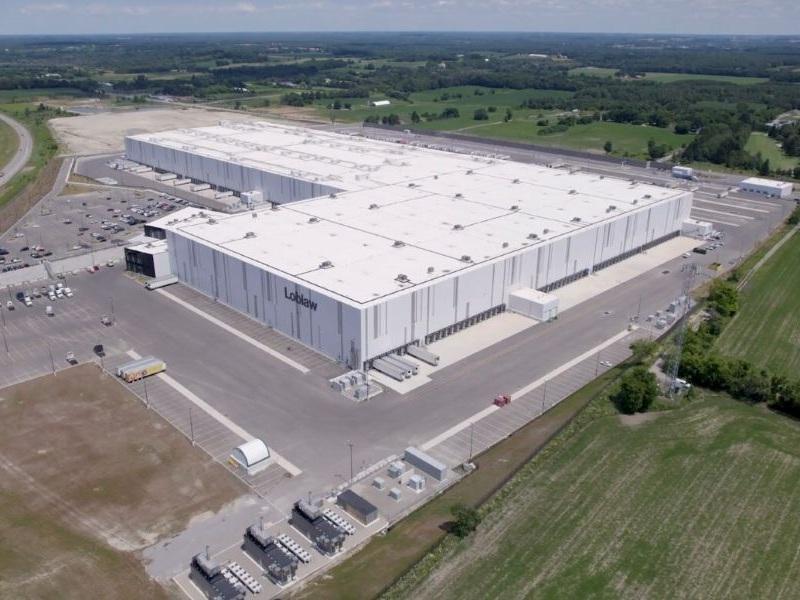
One of the largest commercial rooftop solar projects in Ontario is Loblaws’ 7.5-megawatt installation in East Gwillimbury, designed to take up approximately 435,000 square feet of roof space.
Oxford Properties is another leader in deploying rooftop solar across its portfolio of commercial buildings in Ontario. At the James Snow Business Park in Milton, at least 3.85 MW of electricity is expected to be generated per year. Additionally, Oxford’s shopping malls such as Square One Shopping Centre, Scarborough Town Centre and Yorkdale Shopping Centre are equipped with rooftop solar panels.
As for Schutz, it plans to use the Belleville facility as its benchmark for sustainability in North America, Sommers said. To maintain its focus on sustainability, Schutz plans to install more solar arrays on its U.S. facilities.


 Industry Events
 Locations