


 Locations





Strong electric vehicle sales and a booming cleantech industry are leading Canada’s low-carbon economy, a new data tool from the Canadian Climate Institute shows, while the country continues to lag on on its greenhouse gas emission targets.
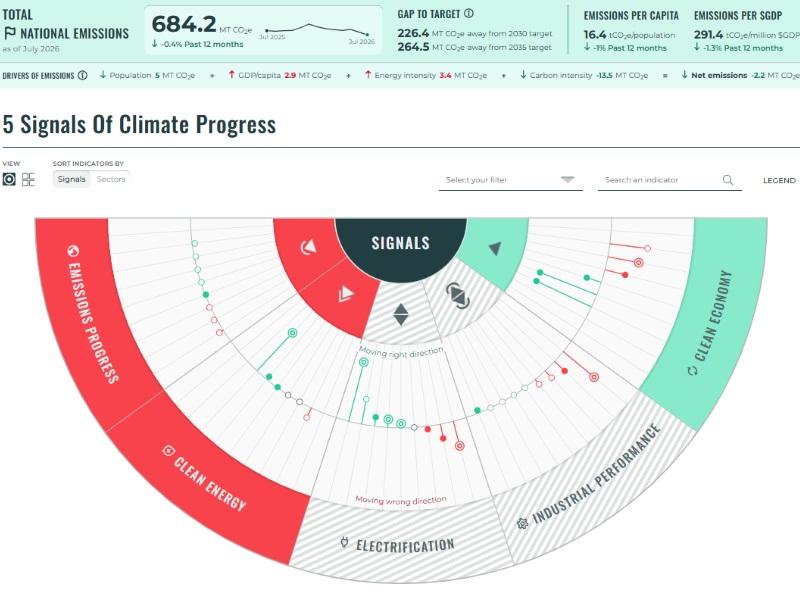
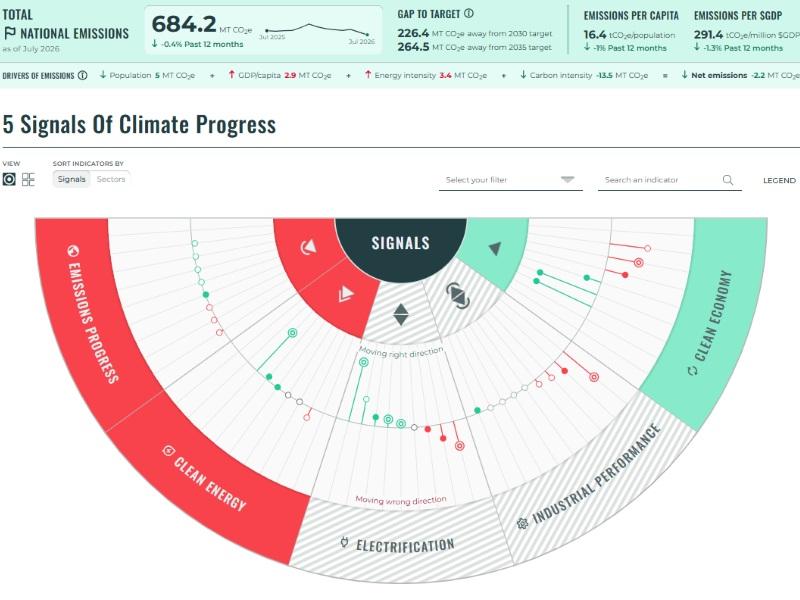
Last week, the research organization unveiled the Climate Progress Tracker, a dashboard measuring Canada's performance across five signals of climate progress. Visualized as a half-circle, it draws upon more than 40 indicators that feed into electrification, clean energy, emissions progress, industrial performance and the clean economy.
Developed by the institute's 440 Megatonnes project, the tracker measures the direction and pace of change across the five signals, as well as the trajectory of Canada's greenhouse gas emissions.
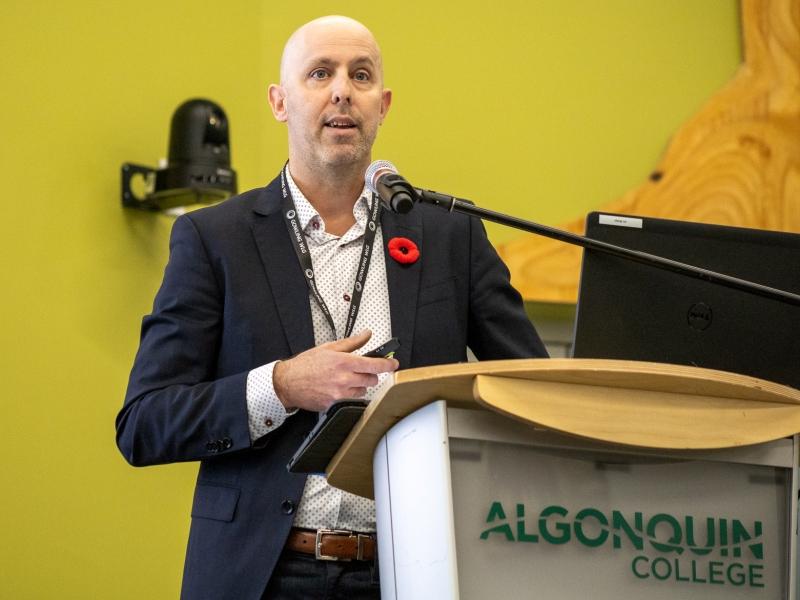
Arthur Zhang, a senior research associate with 440 Megatonnes who helped develop the tool, believes the Climate Progress Tracker is the first of its kind in Canada.
The project aims to make the tracker a "one-stop shop if you are somebody who wants a snapshot of how Canada is doing” on climate change, he said in an interview with Sustainable Biz Canada. The tool identifies where the country is advancing or falling behind using specific performance indicators.
Where Canada stands on climate progress
If he were doing a weather report based on the tracker’s initial results, Zhang’s forecast would be “cloudy with patches of sunlight.”
The bright spots are in transportation: electric vehicle (EV) sales have risen over the past 12 months, biofuel consumption is increasing and more public charging stations are equipped with fast chargers. Another positive sign is declining natural gas consumption for home heating, driven by the switch to heat pumps.
The clean economy is the strongest of the five signals, driven by rising exports of low-carbon commodities and domestically manufactured cleantech products.
However, emissions progress and clean energy are flashing warning signs. National emissions declined by just 0.4 per cent over the past 12 months, while electricity generation from natural gas has been increasing. Alberta's industrial carbon market is also trending in the wrong direction.
“There’s things that are doing better and things that are doing well,” Zhang said. “And so the other goal for us is to be able to highlight where there is actually genuine gaps that need to be fixed within the overall landscape in Canada.”
That picture is worrisome. The equivalent of 684.2 megatonnes of carbon dioxide was emitted between July 2025 to July 2026, meaning Canada is hundreds of megatonnes away from meeting its 2030 and 2050 climate targets. Analysis from the Canadian Climate Institute found the country is off track to meet both goals.
Tracker could expand to include investment, policy analysis

Although the Climate Progress Tracker is still new, Zhang said early responses have been positive.
440 Megatonnes hopes policymakers will use the tracker to identify weaknesses in Canada's climate strategy and “hone in and refine where the strengths are for Canada,” he said.
The business community is another potential audience for the tool. For example, an EV charging company could use the tracker to identify a declining ratio of public charging ports to EVs on the road. That could reveal a business opportunity to fill in the gap, Zhang said.
440 Megatonnes also plans to enhance the tracker with new indicators of progress, such as investment into the clean economy and the status of the carbon markets.
The project also plans to incorporate the Canadian Climate Institute's policy analysis into the tracker. Federal climate policy has undergone significant changes under Prime Minister Mark Carney, including the elimination of consumer carbon pricing and the abandonment of plans for an emissions cap on the oil and gas sector.
Now, the federal government is pressing forward on a budget that includes $52 billion for electrification, boosting renewable electricity and modernizing the nation's grids.
“So we’ll likely expect that type of investment – once it kicks in – it should be pushing that signal in a more positive trend,” Zhang said.




 Industry Events
 Locations

