Locations







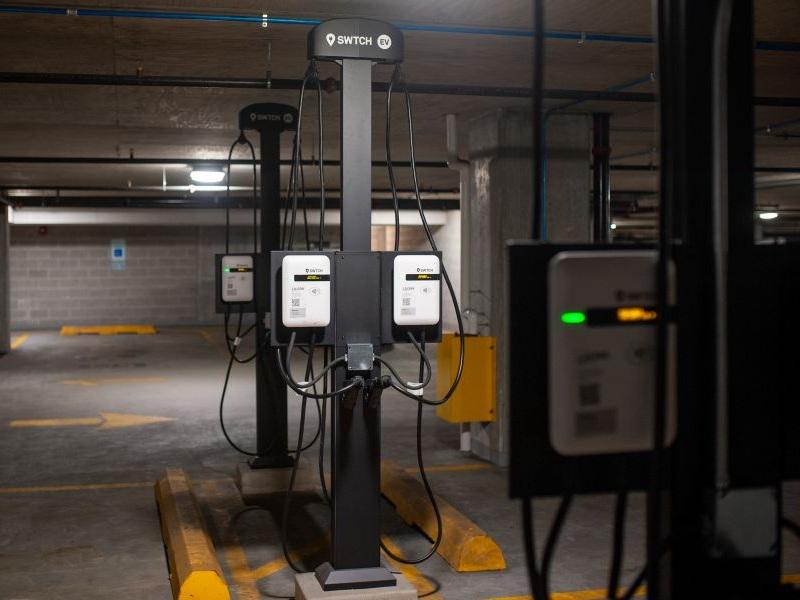
For condo owners, managers and residents unsure about how to add electric vehicle (EV) chargers to their building, a guide written by non-profits Plug’n Drive and Clean Energy Canada is designed to answer their questions.
Titled Make Your Condo EV Ready: The 2025 Guide for Condo Owners, Boards and Managers, it was made to help the decision-makers of multi-unit residential buildings understand the basics. Those include which EV charger would be best suited for a condo, the expected cost of charging per province, and policies to support the installation of chargers in parkades.
Insufficient access to home charging in condos has been found to be a barrier to EV adoption, particularly among younger Canadians who are likely to live in such buildings and want to buy an EV.
The Vancouver-based non-profit wrote the guide “to reach that group and specifically lay out very plainly what they can do about it,” Denise Lee, a Clean Energy Canada policy advisor and contributor to the report, said in an interview with Sustainable Biz Canada.
She has heard stories of potential residents who would not consider a building unless it has EV chargers. Building owners “should be thinking about what type of tenants or residents are going to be living in that building throughout its lifetime, and that absolutely involves an increase in EV demand,” Lee said.
What to consider when installing EV chargers in a building
Home charging is more affordable and popular compared to public charging because of advantages such as lower charging rates, the report points out. In Ontario, charging during off-peak hours to fully top up the battery of a typical EV could cost approximately $3 at home. Using a public charger could cost two to eight times more for the same scenario.
However, getting EV chargers in a condo building is more complicated than in a single-family home, Lee said. It leads to a much larger increase in electricity demand, challenges around parking allocation, and managing the complex electricity infrastructure. Pricey retrofits may be needed, costing up to $3,500 per stall, the report states.
EV energy management systems — devices and software that monitor and control the timing and power of EV charging to optimize energy usage — could be a cost-effective solution. The technologies can help reduce the upfront costs of installing EV chargers and the electricity costs by scheduling charging at times of low demand, for example.
Plug’n Drive and Clean Energy Canada advise condo owners, boards and residents to consult the regulations from all three levels of government if they are interested in adding EV chargers to their building. Incentives, such as British Columbia’s Go Electric EV Charger Rebate Program, could be available, and right-to-charge laws vary by province.
Laying out the benefits

EV chargers in condos tend to be deployed either all at once led by the building manager or board, or one at a time by a unit owner who pays for the infrastructure in their parking stall.
The authors of the report recommend a comprehensive retrofit to make every building parking spot EV-ready. Research has found it could cut the average cost per stall by half and prevents “repetitive voting proposals” for individual applications or disputes among unit owners.
Early adopters who “push the level of ambition for everyone else” with EV chargers can lead to more neighbours taking an interest, pushing a condo board to consider a wide-scale charger retrofit, Lee said.
For individuals interested in having EV chargers at their condo, Lee recommends they “really lay out the benefits of this either for themselves or the people around them.” Residents could point out examples of condos that have successfully made the retrofits, she said, and how the equipment can reduce the cost of charging an electric car to a few dollars per day.
If a condo manager or board does not have an EV readiness plan, such as a sense of a building’s electricity capacity as more residents drive such cars, “it’s just going to be a lot more work for you,” Lee said.
Being proactive means avoiding expensive work such as redrilling walls and upgrading electricity capacity, she explained, spending thousands of dollars rather than tens of thousands of dollars.



 Industry Events
 Locations