


 Locations






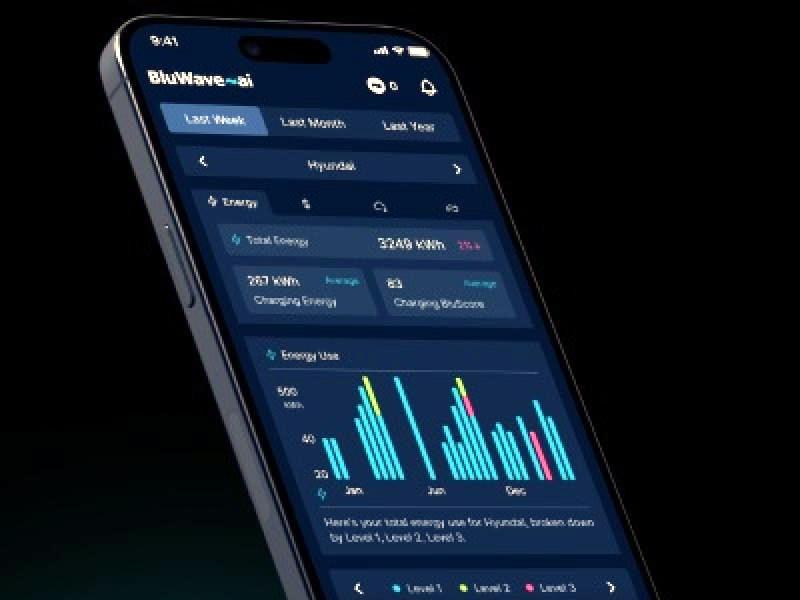
As BluWave-ai enters its 10th year of operations, the Ottawa-based cleantech company has secured $8.1 million in new financing to scale its artificial intelligence technology, which helps optimize electricity use across electric vehicle charging, battery storage and data centres.
Based in Ottawa, the company uses artificial intelligence (AI) to improve the efficiency of electric vehicle charging (EV Everywhere), manage stationary battery systems more effectively (Energy Storage Autopilot) and smooth out power demand for data centres (Data Center Autopilot).
Equipped with that product portfolio and new funding, BluWave-ai aims to grow and enhance its Canadian operations, engineering team, patent business and international expansion.
The extended financial runway can help the company reach “milestone steps that we would like to get to, before larger institutional investment rounds,” its CEO and founder Devashish Paul said in an interview with Sustainable Biz Canada.
“Entering the 10th year of operation means we’re here to service the grid as it grows," he said. After decades of stagnation, grids must keep up with a spike in demand for power driven by electrification, electric vehicles and data centres. Electricity regulators are expected to be highly interested in BluWave-ai’s software as a result.
“Being in business for that is key.”
New capital to support domestic, international growth
The funding combines a Series A-2 equity close, federal financing and capital from Royal Bank of Canada and Bank of Montreal. New and returning international angel and family office investors are also involved. It builds on a $9.5-million investment in 2023 and $1.5 million in funding to found a Japanese subsidiary.
At the centre of the growth plan is increasing BluWave-ai’s business development and sales teams which address the Canadian market.
Its engineering department, Paul said, will be given a shot in the arm to develop its patent portfolio and product line such as EV Everywhere and Data Center Autopilot.
“When we started the company, the customers were kind of hesitant test out AI technologies,” Paul said. “Now it’s kind of mainstream.” BluWave-ai noticed some clients were developing technologies similar to what it invented. The company plans to be open to licensing its patents so its customers can build on the technical knowledge, Paul said.
He plans to extend BluWave-ai’s reach by establishing international subsidiaries in Europe, Australia and Southeast Asia through collaboration with Global Affairs Canada.
BluWave-ai is also using the federal non-dilutive financing portion of the financing to enhance its Energy Storage Autopilot which is deployed in Canada. One such partner is Evolugen, which is using the product to support 400 megawatts of battery energy storage systems.
The company has brought on two new members to its board of directors to guide its growth: Suzanne Grant and Mario Montana. Grant is an entrepreneur who serves as the executive director of the Capital Angels network, and Montana is an experienced hand in the semiconductor and energy sectors.
Capital to move toward electrification: Paul
The fundraise, Paul said, dovetails with the encouraging signs for clean energy. The Canadian government has outlined plans to invest $52 billion in electrification, grid modernization and renewable energy. Alternatives to fossil fuels are in high demand after trade of oil and gas in the Strait of Hormuz was severely constrained. Political developments in the U.S. could also influence investment decisions following the midterm elections.
Events like these, particularly the U.S. midterm results, move “capital that is parked on the sidelines and in the venture and private equity world where they’re not investing in electrified transport and renewable energy,” Paul said. “That’s going to change now.”



 Industry Events
 Locations

