
 Locations







Two reports released today by Carbon Removal Canada say the country could catalyze the drawing down and storage of large quantities of the greenhouse gas to become a global leader in the emerging industry.
Published on Carbon Removal Day, an event being held at the National Arts Centre in Ottawa, the Toronto-based non-profit lays out a blueprint for Canada to host projects and companies that have the potential to remove one billion tonnes of carbon dioxide (CO2) per year from the environment by 2050.
In The Billion Tonne Blueprint, Carbon Removal Canada outlines this plan and what the industry needs to scale. In Removals into Revenue, the non-profit describes the potential economic opportunities from carbon removal and the role the Canadian government could play in stimulating that growth.
Modelling by Vancouver-based Navius Research found the Canadian carbon removal industry developed under net-zero emissions constraints could mean an economic boost of $78 billion by 2050, with 300,000 jobs created and reductions in the cost of the still-expensive technology.
“If Canada is able to really scale this up quickly and responsibly, we think there is a first-mover advantage here,” Daniel Kelter, Carbon Removal Canada’s senior director of public affairs, said in an interview with Sustainable Biz Canada.
Why Canada stands out
Carbon removal encompasses technologies and methods such as extracting CO2 from the atmosphere and oceans, scattering minerals on soil, converting mining wastes to carbon-storing rocks, and carbon capture and storage technology on pulp and paper sites.
Kelter noted the role the climate technology can play in calls by the United Nations for net-zero targets, which requires pulling CO2 from the environment as well as offsetting existing emissions.
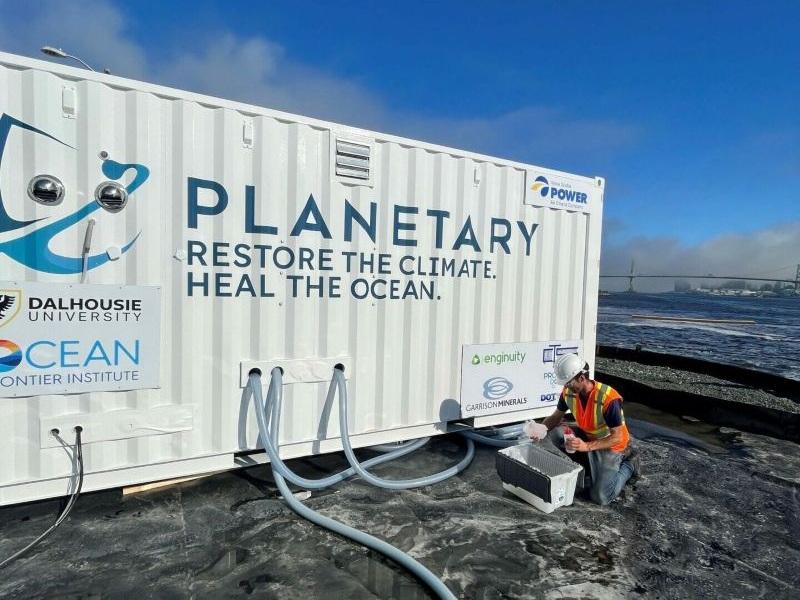
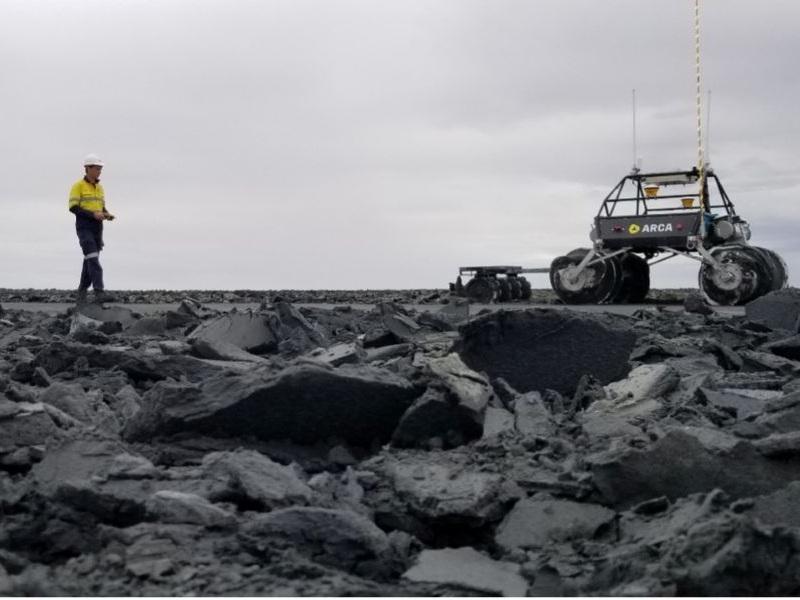
There is currently about 107,000 tonnes of annual removal capacity in Canada, according to Carbon Removal Canada’s Carbon Console. A plethora of Canadian carbon removal players exist today, such as Carbon Engineering, Exterra, Planetary Technologies, Arca and Deep Sky.
The Billion Tonne Blueprint summarizes Canada’s advantages in carbon removal, such as its low-carbon electricity grids, large energy industry, amenable geology and strong education system. Plus, the country has other benefits such as parts of a policy framework and a tax credit for the related carbon capture, utilization and storage technology, sending positive signals to international investors, Kelter said.
Foreign companies are enticed by Canada’s potential, he added, setting up shop and developing projects. U.S. company CarbonCapture Inc., for example, moved its planned project to Alberta in 2025, and Swiss firm Climeworks established an office in Calgary.
Carbon removal can help Canada’s exports of carbon-intensive materials like steel stay competitive amid pressure from the European Union’s carbon border tariff, Kelter said. The technology can also be an export opportunity, with Canadian companies providing their designs to the world and selling services to other countries.
While Canada has natural advantages, it needs to keep up with policies and funding from competitors, Kelter said. Germany, for example, committed almost $800 million for carbon removal in 2025.
Staying ahead in the global race
To maintain momentum, Carbon Removal Canada makes a series of suggestions to be carried out from now to 2050 for Canada to build trust, lower costs and create demand for the climate tech.
The Billion Tonne Blueprint states that by 2035, Canada could be a global hub for carbon removal with dozens of operating projects. This step could be realized by Canada using its reputation for quality to build partnerships with trading partners and Canadian companies meeting demand for carbon removal credits from Europe and Asia.
Removals into Revenue suggests roles the federal government could play to address key obstacles to the sector’s growth.
One such role is overcoming the “valley of death,” when young companies often falter when going from pilot projects to demonstration deployments and finally commercialization.
To bridge the valley of death, Carbon Removal Canada urges the creation of a $500-million government backstop to protect companies against early risks. It would only activate if projects face payment challenges due to technical issues or market conditions.
To address the medium-term challenge of creating markets, the non-profit suggests scaling government carbon removal procurement over the next decade, growing from the initial $10 million to at least $100 million per round.
Carbon Removal Canada announced the Advance Carbon Removal Coalition today, an initiative aiming to mobilize $100 million in new support for Canadian carbon dioxide removal projects by 2030. Its founding members include the federal government, BMO, RBC, Shopify and NorthX.
In the long run, the Canadian government could support consistent demand for carbon removal by allowing the generation of credits within domestic and international markets.
Should Canada be the “first to the podium in the next couple of years,” it could help set standards other countries will end up playing by, Kelter said.



 Industry Events
 Locations