Locations



GUEST SUBMISSION: In real estate, sustainability is often discussed in terms of future goals: net-zero targets, green building certifications, long-term decarbonization roadmaps.
Its value, however, is ultimately proven through execution on the ground. At Starlight Investments, that means embedding sustainability into the everyday decisions that shape how rental communities are built, operated and experienced by the people who call them home.
The results are not always linear. Some years move faster than others. The direction, however, is clear over time, and the impact is tangible.
Complete communities are sustained over time
The term "complete community" gets used a lot in real estate. A complete community is one where the everyday experience of living is considered as carefully as the physical infrastructure that supports it.
It means asking not just what we are building or improving, but who we are doing it for and what their lives actually need. For us, that means looking not only at design intent, amenities and master planning, but also at what it takes to build, operate and sustain rental communities over time.
The District, a new mixed-use development nearing completion in British Columbia, is one example of this vision being designed from the beginning: a place where residents live, work and play, with thoughtfully designed suites and amenities, retail, parks and community programming planned together.
Further to the holistic complete community vision and design of leading new-build rental communities, the most consequential question is what this looks like in existing buildings – the ones already occupied, already aging and already home to hundreds of diverse people.
Across our portfolio of more than 70,000 suites, that is where most of the work happens and where most of the impact is felt. That is also where the complete communities vision becomes most practical: in the everyday decisions that shape how residents live and how buildings impact their surroundings and evolve over time.
At Paisley Square in Guelph, for example, that has included building-level sustainability initiatives alongside a biodiversity assessment that helped us better understand how the property contributes to the surrounding natural environment.
Sustainability in practice: Energy, water and waste
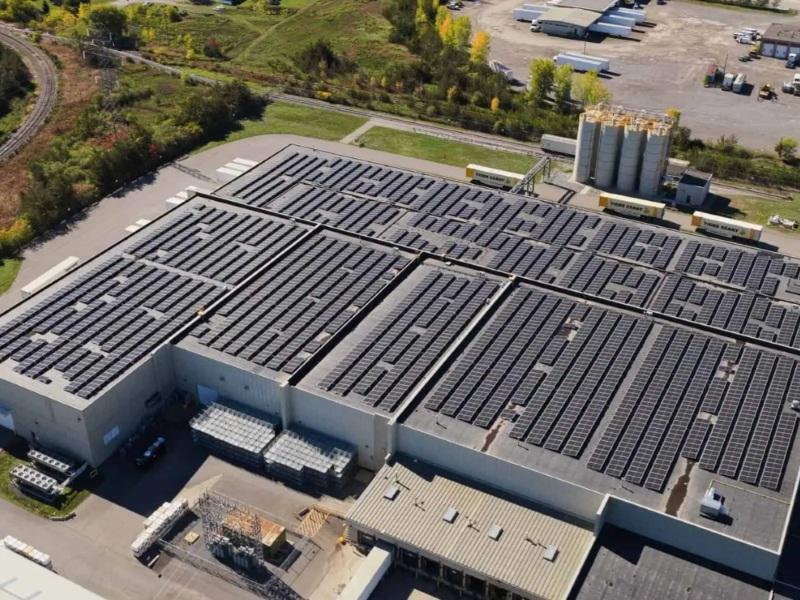
Since 2019, Starlight has invested more than $2.6 billion to maintain, upgrade and expand our portfolio, including $22.5 million in energy and water retrofits in 2025 alone.
Rather than replacing aging equipment like for like, each end-of-life moment is an opportunity to ask: how do we make this building better?
That work is also highly deliberate. We evaluate needs across the portfolio, prioritize interventions over time and look for opportunities to bundle improvements in ways that reduce disruption and increase long-term positive impact.
Sub-metering is one of the clearest illustrations of this thinking in action. By installing electricity and water sub-meters across our residential portfolio, residents can better understand what they are actually consuming and are more likely to take ownership of it.
Industry experience shows this typically produces consumption reductions of between 20 and 25 per cent. In 2025 alone, we installed 7,572 new water sub-meters, a near fourfold increase year-over-year.
Managing waste is the quieter and more complex piece. Programs vary across municipalities and the logistics of coordinating hauling, bin placement and education across thousands of suites require sustained effort. In 2025, we launched a new waste tracking application giving property teams real-time visibility into what is happening at the building level, making it possible to intervene in specific, targeted ways.
Taken together, these investments have helped contribute to a 27 per cent reduction in carbon emissions intensity and a 19 per cent reduction in energy intensity since 2019.
These investments matter not only because they improve building performance, but also because they help create buildings that operate more reliably, are better maintained and support healthier, more stable everyday living for the people who call them home.
The human layer: Well-being, connection and belonging
Improving building performance is one part of what makes a community complete; supporting resident well-being and community connection is another. Complete communities also require investment in the programs and everyday experiences that turn a building into a neighbourhood, designing for well-being, alongside strong building performance.
This is also where our industry has real work to do. The environmental side of sustainability now has more established measurement tools. The social side is harder. How do you measure the value of a resident who feels genuinely at home? How do you quantify the contribution of stable, quality housing to the health of a neighbourhood?
Solving these questions requires a broader understanding of what sustainability in housing actually means: not only lower emissions and higher certification scores, but also resident experience, belonging and long-term quality of life.
At Starlight, that includes resident surveys, engagement events and building-level programming that help bring people together and generate feedback to inform future improvements.
In our 2025 Canadian Residential survey, 87 per cent of residents said they were satisfied with their building, alongside strong satisfaction scores for amenities, social areas, and building events and programming. That kind of feedback matters because it helps show whether the investments we are making are translating into stronger resident experience over time.
Our commitment to community also extends beyond our own buildings. Through partnerships with more than 40 social housing organizations, over 1,120 suites across our portfolio are reserved for vulnerable and at-risk individuals. Housing access and housing quality are not separate issues.
They are part of the same long-term commitment to creating communities where people can live with greater stability and support.
Why operational improvement matters at scale
What makes this work stick is not just the technology or the capital behind it. It is the culture inside the organization. Shifting how people think about sustainability across employees, property managers and residents takes years.
When that shift happens, it becomes self-reinforcing. Employees start asking sustainability questions without being prompted. Property managers raise more environmentally efficient options proactively. The work moves from protocol into practice.
That is when operational improvement becomes possible at real scale. In rental housing, scale matters. It is what turns individual building decisions into long-term community outcomes.
The most meaningful progress in sustainability is often the kind that does not show up in one-off instances: a building that is better maintained, more resilient and better positioned for the long term, a resident who has lived in the same home for a decade because it has been well maintained and genuinely cared for.
Sustainability in residential real estate is built one decision at a time. The measure of that work is not only in the data, though the data matters. It is in whether the people living in those buildings notice the difference.
In rental housing, complete communities are not defined only by how they are designed. They are sustained by how they are operated, improved and cared for over time.
That is what practical sustainability looks like, and it is where some of the most important work still lies ahead.




 Industry Events
 Locations