
 Locations
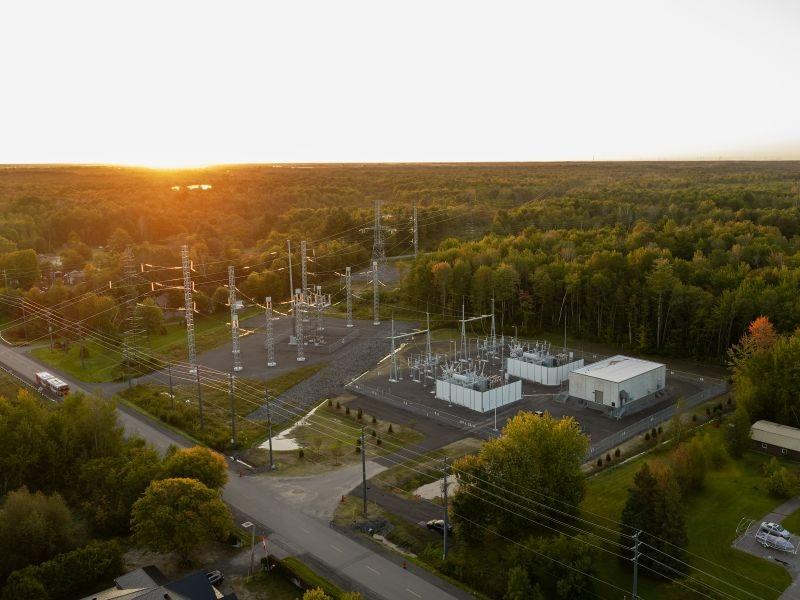





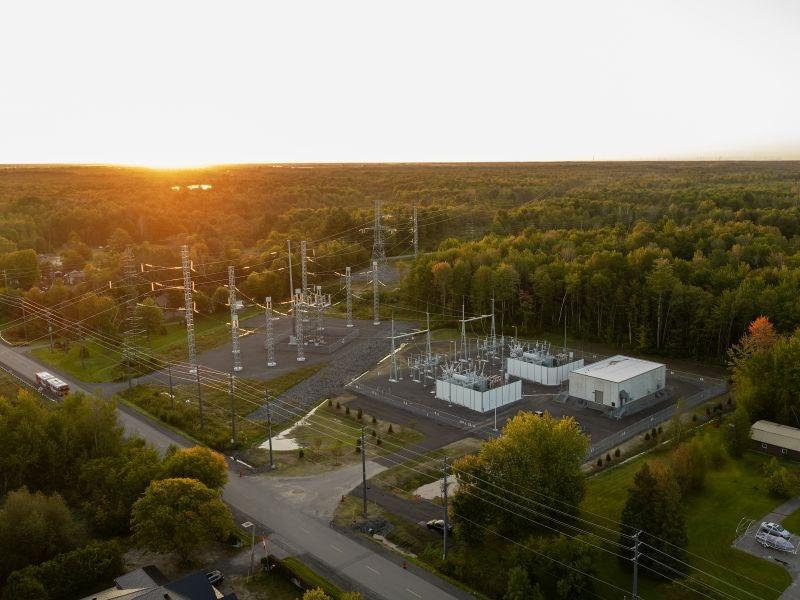
By rethinking its use of concrete and other building materials, Hydro Ottawa has built a substation with a smaller carbon footprint, offering a blueprint for lower-carbon infrastructure as the utility expands its electricity distribution network.
At its Piperville municipal transformer station in southeast Ottawa, the utility used design strategies and lower-carbon materials to reduce embodied carbon — the greenhouse gas emissions associated with building materials over their life cycle. The choices resulted in a 12.3 per cent reduction in embodied carbon compared to Hydro Ottawa's Cambrian substation, which served as the baseline.
Piperville is Hydro Ottawa’s first major substation since the Cambrian facility was energized in 2021. Both substations have a capacity of 90 megawatts and similar electrical equipment.
Hydro Ottawa’s plan to offset embodied carbon emerged from asking what it could do differently “while still reducing carbon without actually affecting the operations or the station itself or what the station was able to produce,” Laurie Heuff, its vice-president of distribution system planning and asset management, said in an interview with Sustainable Biz Canada.
The utility saw a chance to improve its sustainability after Cambrian, she said, and the development of the Piperville substation presented a good opportunity to reduce embodied carbon without reducing overall costs, which was "a no-brainer at that point in time.”
Using sustainable design, concrete mix
The Piperville substation distributes electricity to southeast Ottawa, providing increased redundancy and resilience, Heuff said. Construction on the facility started in November 2024 and was finished in July 2026, with the station energized a month later.
Embodied carbon has become a priority of the buildings sector to tackle as it is responsible for one-third of its carbon emissions.
To address the embodied carbon of the Piperville substation, Hydro Ottawa focused on two strategies.
The first strategy involved using less concrete by, for example, opting for a shallower basement. The second was using a concrete mix with lower associated emissions than the mix used at Cambrian.
Altogether, the utility’s efforts resulted in a net reduction of 618 tonnes of carbon dioxide compared to the Cambrian substation, enough to offset the 92 tonnes that were added from manufacturing and procuring heavier, high-capacity electrical equipment.
An example for Hydro Ottawa
Hydro Ottawa plans to apply the lessons from Piperville to four more substations scheduled for construction between 2026 and 2030, Heuff said, including Hydro Road and Mer-Bleue. The utility intends to use the same design principles to achieve similar reductions in embodied carbon.
When asked if there is a possibility to further diminish embodied carbon, Heuff said Hydro Ottawa will review the opportunities with its engineering team, particularly regarding equipment supply. One potential improvement Heuff cited is reducing the use of sulphur hexafluoride, an insulating gas used in high-voltage electrical equipment that is an extremely potent greenhouse gas when released into the atmosphere.
Piperville will also help Hydro Ottawa advance its sustainability goals by supporting the integration of distributed energy resources, including rooftop solar panels and stationary batteries, into its distribution network.
These technologies, Heuff said, could be used for energy efficiency measures like reducing energy use during the periods of highest demand, called peak shaving. Hydro Ottawa could install rooftop solar panels and batteries on its stations to offset natural gas generation during peak demand hours, Heuff said. That includes the Piperville substation.
The utility, which manages the electricity transmitted to over 377,000 homes and businesses in Canada’s capital, has a sustainability commitment which includes an ambition to have net-zero operations by 2030. It took steps toward that goal by transitioning its fleet to electric vehicles and installing solar panels on its facilities.
“We do feel it is our part to contribute from a sustainability perspective to the environment and to the community,” Heuff said.



 Industry Events
 Locations