


 Locations

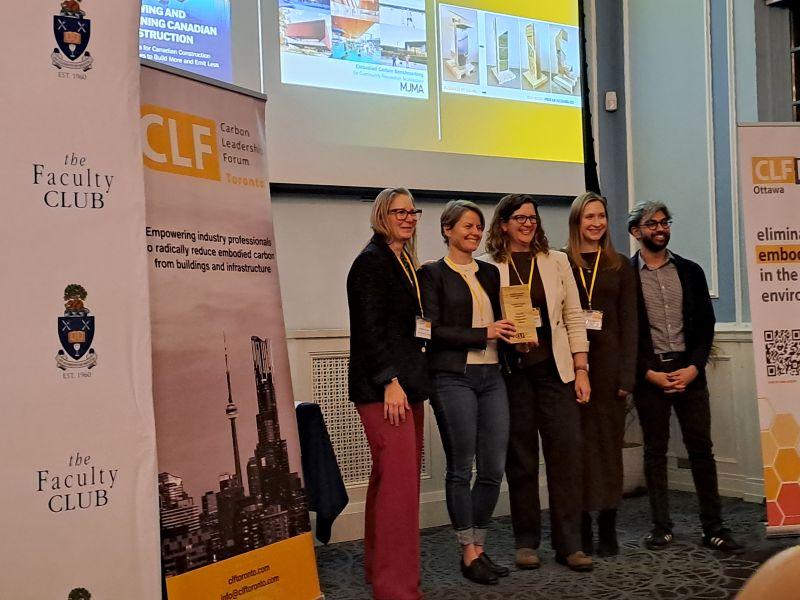


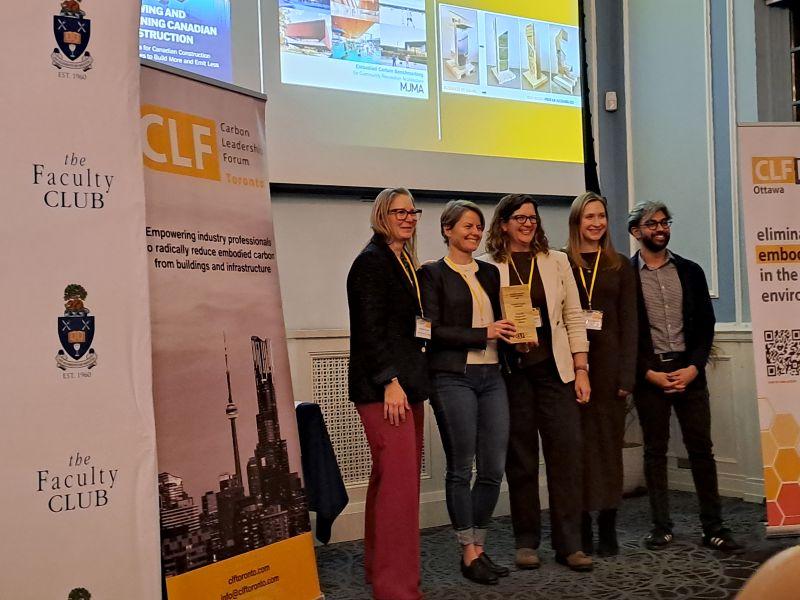
The 2026 Ontario Embodied Carbon Awards hailed the best-in-class buildings and innovators that are leading in climate-forward construction, from a large mixed-use project in Toronto to a partnership with some of Canada’s largest construction firms.
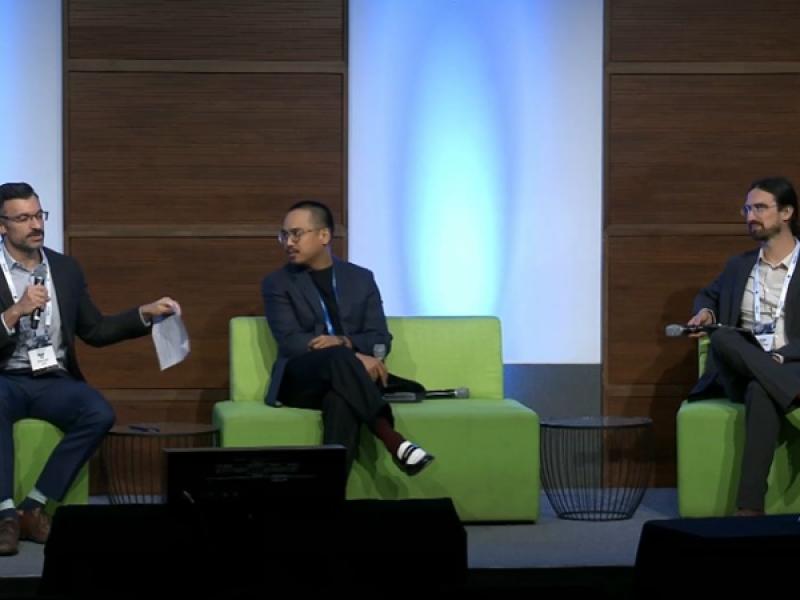
The awards ceremony was held Thursday evening at the University of Toronto’s Faculty Club, the fourth such event organized by the Toronto and Ottawa regional hubs of the Carbon Leadership Forum (CLF).
With two new categories introduced this year, the event celebrated the efforts in the province to shrink embodied carbon, the greenhouse gas emissions associated with building materials. The production, use and disposal of carbon-intensive materials such as concrete, steel and asphalt contribute significantly to greenhouse gas emissions. One 2019 estimate attributed 17 per cent of global emissions to embodied carbon in buildings and infrastructure.
Reducing emissions now is urgent because they contribute to future warming, Alistair Vaz, co-chair of the Toronto CLF hub, said in his opening remarks.
The highlighted projects can hopefully “inspire more collaboration within the industry for different organizations, different groups to come together” on decarbonization, Anya Barkan, a senior sustainability manager at construction firm Multiplex, said in an interview after accepting a trophy on behalf of its winning group.
The building awards
The New Construction – Small Buildings award went to 308 Parkside Dr. in Waterdown, a multi-unit, low-rise rental project that contains 44 units across four buildings. With a combination of compact basements, wood siding and low-carbon insulation, the embodied carbon intensity was reduced to 45 per cent below a typical multifamily residential building, as per the CLF’s benchmark.
The midrise category was introduced this year, separating it from the large-buildings category. The Western North York Community Centre in Toronto took home the accolade for features such as a hybrid steel and mass timber structure.
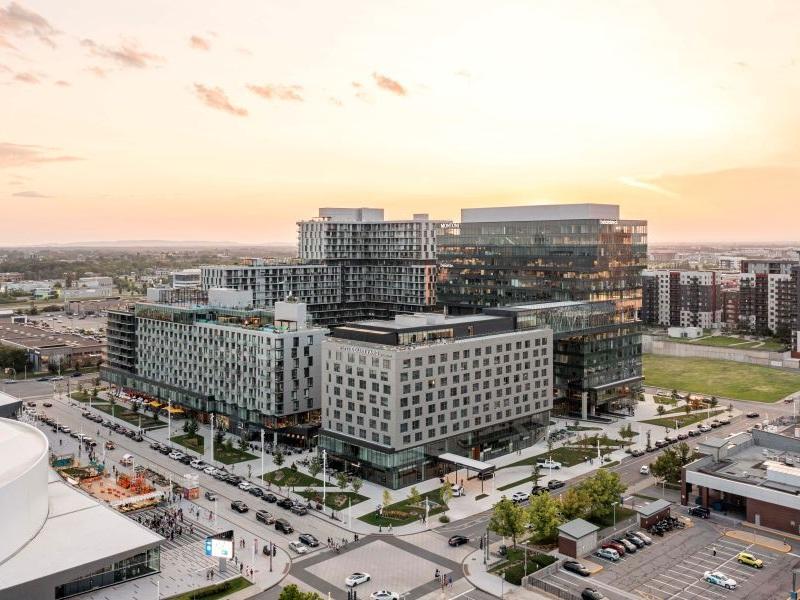
The award for New Construction – Large Buildings was conferred to Yonge & Roselawn. The two-tower high-rise development in Toronto is a mixed-use project consisting of 630 residential units and 65,000 square feet of retail space. Life-cycle assessment modelling software used throughout its design and an integrative procurement to select low-carbon materials like concrete were cited by the jury. The embodied carbon was cut by 22 per cent between working drawings and final design.
Yonge & Roselawn could encourage others to “use the right product,” said Ramiz Siddiqi, an assistant project manager at SKYGRiD Construction Inc. which is the construction manager of the development.
Circularity, innovation, leadership awards

The inaugural Circularity Award went to 255 Chrysler Dr. in Brampton, where a roof replacement project retained as many of the existing materials as possible. Engineering firm WSP salvaged and retained 85 to 90 per cent of the existing components. If new materials were required, WSP chose readily available materials with lower embodied carbon emissions, such as factory-laminated base sheet panels.
Full-life embodied carbon emissions were cut by 61 per cent and project costs by approximately 25 per cent compared to a typical approach to reroofing.
“It feels great to get some recognition,” said Milirsan Pugalendiran, a project manager at WSP. “We took a very simple concept and we were able to find significant carbon savings.”
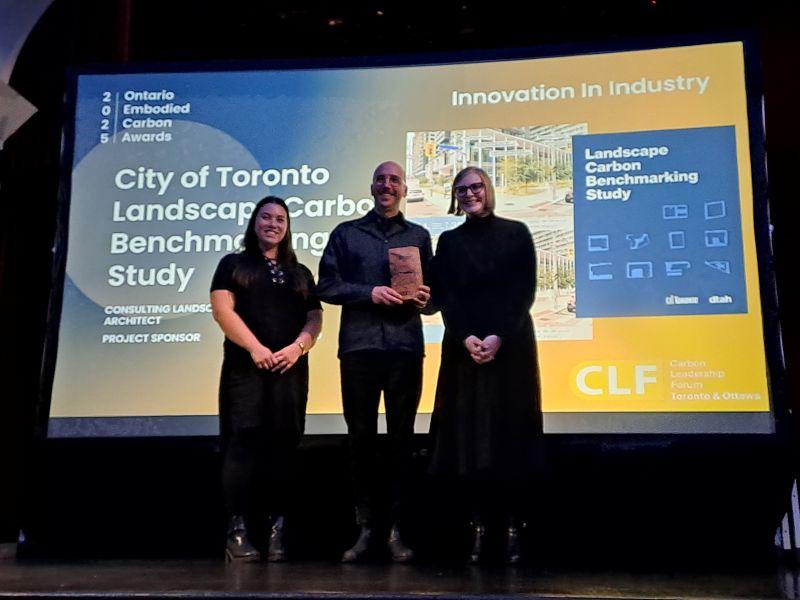
The Innovation in Industry award was presented to ControlPro, a remote thermostat management technology engineered by EXACT Technology and developed with Stephenson's Rental Services.
ControlPro provides real-time, remote access to heaters on construction sites. Piloted across two multiplex construction sites in the Toronto area, ControlPro shaved approximately five per cent of the carbon dioxide emissions and nearly $60,000 in fuel costs for every 1 C reduction in temperature.
“The more we work with contractors and other people that are building in the space, the more they see the opportunities,” Stacia Van Zetten, the chief strategy officer and co-founder of EXACT, said in an interview.
The final accolade of the night for Embodied Carbon Leadership was handed to the Canadian Construction Sustainability Alliance (CCSA), a coalition of nine general contractors in partnership with the Transition Accelerator. The alliance helped write Growing and Greening Canadian Construction, a report drawing from over 600 construction projects that outlines five ways for Canadian construction companies to decrease on-site carbon emissions.
Multiplex, which is one of the CCSA members, is proud of how the alliance enables the construction industry to cooperate and advocate as a collective, Barkan said. Its next step is expected to be identifying additional opportunities to decarbonize beyond on-site emissions, she said.



 Industry Events
 Locations

