
 Locations



 Hypercharge Networks Corp. is strengthening its presence in the U.S. with an agreement to acquire Texas-based electric vehicle (EV) charging solutions provider REVS Charging, marking a new phase in the company’s North American growth strategy.
The transaction, which values REVS on an enterprise basis at up to US$4.75 million, would add around 550 owned Level 2 charging ports and approximately 650 customer-owned ports in the U.S. to Vancouver-based Hypercharge (HC-X). The acquisition would bring Hypercharge's total North American portfolio to more than 11,200 charging ports sold, owned and managed.
David Aaronson, the founder and CEO of REVS (which stands for Refuel Electric Vehicle Solutions), is to join Hypercharge as the president of Hypercharge's U.S. subsidiary upon closing of the transaction, expected Oct. 1.
As Hypercharge’s first U.S.-focused acquisition, REVS “checked the right boxes,” Kyle Moncrief, CFO of Hypercharge, said in an interview with Sustainable Biz Canada.
Hypercharge provides hardware, software and services for EV charging in commercial and multiresidential buildings. Folding in REVS enables Hypercharge to retool itself toward owning and operating EV charging ports. Additionally, it opens a channel for the company to build stronger ties in the U.S.
Charging port ownership a priority of acquisition
REVS operates in 26 states, primarily the southeast U.S. and Texas. The two markets, Moncrief said, benefit from having residents with a high level of discretionary income, strong economic growth, significant infrastructure investment and active development of multifamily and commercial buildings.
There is compatibility between Hypercharge and REVS, making the acquisition a win for both companies, Moncrief said. For example, both companies service multiresidential and commercial buildings, REVS has cost synergies with Hypercharge’s hardware, and Hypercharge can build a better supply chain in the U.S.
After dabbling in owning and operating EV chargers in the past, Hypercharge is taking a greater focus on the business, Moncrief said.
“Now that we have a large enough asset base, albeit customer-owned,” the company believes it has “a good sense of what makes a good site,” Moncrief said, such as locations in population-dense areas with high EV-charging uptake.
Upon closing of the acquisition, Hypercharge would own over 550 charging ports, up from fewer than 20, Moncrief said. The company’s target is to own and operate 30 to 50 per cent of its charging ports within the next three to five years.
The acquisition of REVS builds on Hypercharge’s previous efforts to strengthen its EV charger port network. In the spring, it acquired Eddie from AXSO to fold in over 2,700 EV ports.
Not a 'one-off in the U.S.'
The REVS acquisition is part of a broader push by Hypercharge to expand its U.S. business. The goal over the next three to five years, Moncrief said, is to have its U.S. business be bigger than its Canadian counterpart by investing heavily into growth.
“We don’t view this as a one-off in the U.S.,” Moncrief said about the acquisition. If another U.S. opportunity arises, Hypercharge would want to capitalize on it, he added. More mergers and acquisitions in a “disciplined” fashion should be expected from Hypercharge as it grows in North America, Moncrief said.
The goal is to position Hypercharge to take advantage of a shift in government support. Though government support for EV uptake has weakened in the U.S., such as federal subsidies being phased out under the One Big Beautiful Bill Act one year ago, that could change rapidly, Moncrief said. EV adoption is “a snowball that you can’t stop,” he continued, with sales remaining steady despite decreasing demand and the price parity to gas-powered cars improving.
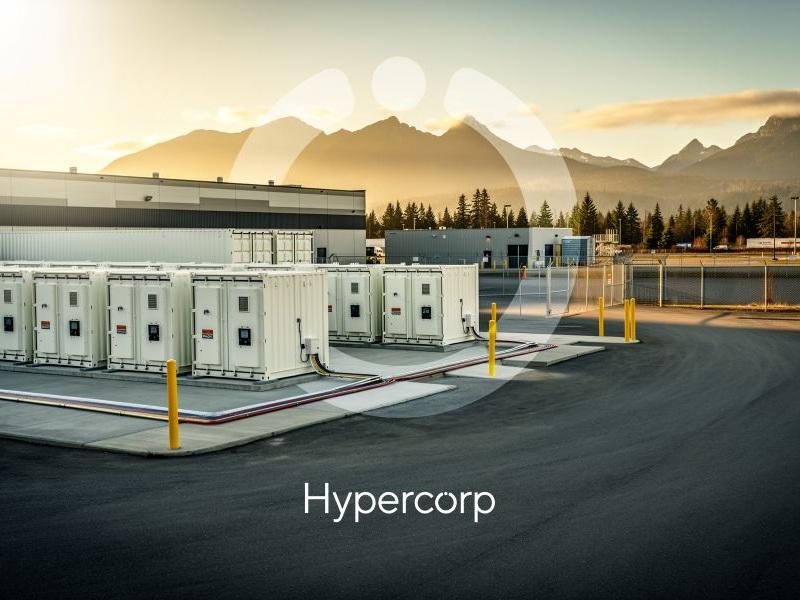
Another growth area for Hypercharge is its Hypercorp Energy Solutions business focused on small-scale battery energy storage systems for commercial and industrial clients. Hypercharge, Moncrief said, is transitioning into broader energy management with a focus on EVs, rather than servicing purely EVs.
There is “plenty of runway still to grow” for Hypercorp and Hypercharge’s energy management services, he said, including opportunities to apply the company's data-driven analytics to Hypercorp.




 Industry Events
 Locations