Locations





Quebec pension fund La Caisse said its climate investments totalled $226 billion by the end of 2025, pouring in an additional $68 billion from the year prior despite a tough environment for sustainable investing.
Montreal-based La Caisse, formerly known as CDPQ, disclosed its portfolio in its latest sustainable investing report released Tuesday morning. The $226 billion in assets was broken down as $156 billion into companies with decarbonization targets and $70 billion in climate solutions.
La Caisse made a significant boost to its investments in companies with decarbonization targets from 2024 to 2025, adding $56 billion to its portfolio compared to $12 billion to climate solutions. The pension fund was the most active in sustainable investing from 2024 to 2025 than it had been since 2021.
“Staying true to our convictions despite the headwinds, which have grown stronger, is something we can all be proud of," Charles Emond, president and CEO of La Caisse, said in a release. While interest in climate-related issues and investment has been challenged as of late, La Caisse chose to “analyze the underlying trend to look beyond short-term upheavals,” Emond added.
As of Dec. 31, La Caisse's net assets totalled $517 billion.
La Caisse’s climate investments
The pension fund has been one of Canada’s stalwarts in sustainable investing with one of the most aggressive climate targets and fossil fuel exclusion policies among its peers.
Last year, La Caisse unveiled its climate strategy for 2025-30. The ambition was to “accelerate the decarbonization of companies and significantly increase transition-related investments by 2030.” La Caisse’s target is to grow its climate action investments to $400 billion by 2030, with the ultimate aim of having a carbon-neutral portfolio in 2050.
The climate strategy is built around two pillars:
- supporting companies in adopting and meeting their decarbonization targets; and
- investing in climate solutions such as low-carbon assets, nature-based solutions, and adaptation and resilience solutions.
To support companies with their decarbonization targets, La Caisse has invested $126 billion into firms that are fully aligned with the Paris Agreement, $6 billion into firms that are in the process of aligning, and $24 billion into companies with committed interim targets as of Dec. 31.
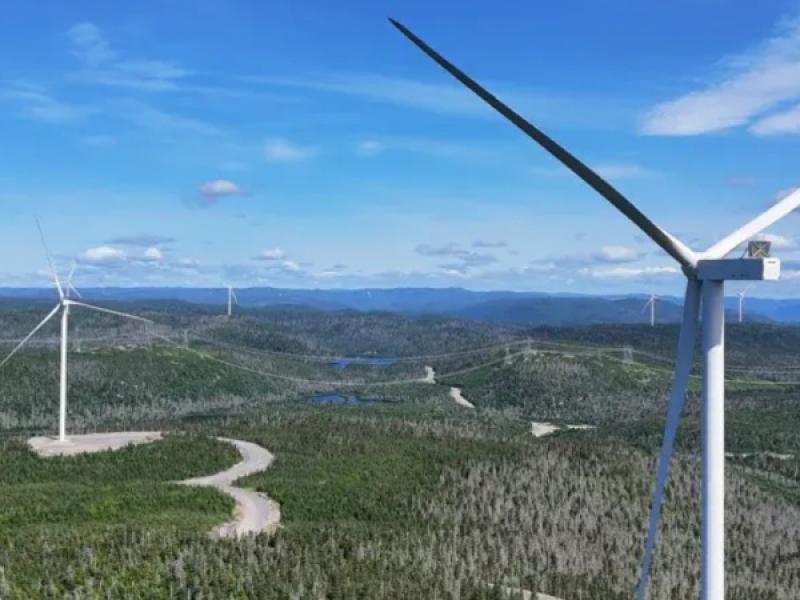
For climate solutions, La Caisse’s portfolio was made up of $65 billion in low-carbon assets across sectors such as renewable energy, sustainable transportation, low-carbon buildings and green bonds. The biggest portion was in renewable energy at $27.4 billion. La Caisse added $7 billion in assets to its low-carbon assets portfolio from 2024 to 2025.
La Caisse acquired up Longueuil, Que.-based renewable energy producer Innergex Renewable Energy Inc. in 2025. More recently, it acquired Innergex’s peer Boralex. Outside of Canada, it has invested in Spanish firm Velto Renewables and Indian renewables company Apraava Energy.
La Caisse surpasses 2030 carbon intensity goal
La Caisse’s data shows its decarbonization strategy has been successful, with the pension fund exceeding its target for the carbon intensity of its portfolio.
By end of 2025, La Caisse’s portfolio carbon intensity, including the transition envelope, was found to be 28.4 tonnes of carbon dioxide equivalent per $1 million, a 64 per cent decline from 2017. La Caisse’s target set in 2021 was to slash portfolio carbon intensity by 60 per cent by 2030.
At the end of 2025, 78 per cent of its portfolio consisted of low-carbon assets or investments in low-intensity sectors, amounting to over $380 billion in investments.
La Caisse exited thermal coal mining and oil production in 2023. Natural gas assets made up 1.4 per cent of its portfolio by the end of 2025. La Caisse said natural gas “remains an energy source that is necessary for the transition, as a complement to renewable energies.”
Renewable energy assets dwarfed its natural gas investments, comprising 5.5 per cent of La Caisse’s portfolio as of the end of 2025.
"In a rapidly changing environment, our responsibility as a long-term investor is to take concrete action,” Emmanuel Jaclot, La Caisse’s executive vice-president and head of infrastructure and sustainability, said.
“At La Caisse, this reality compels us to rigorously and pragmatically refine our practices to fully integrate sustainability into the heart of our investment activities.”


 Industry Events
 Locations