



 Locations



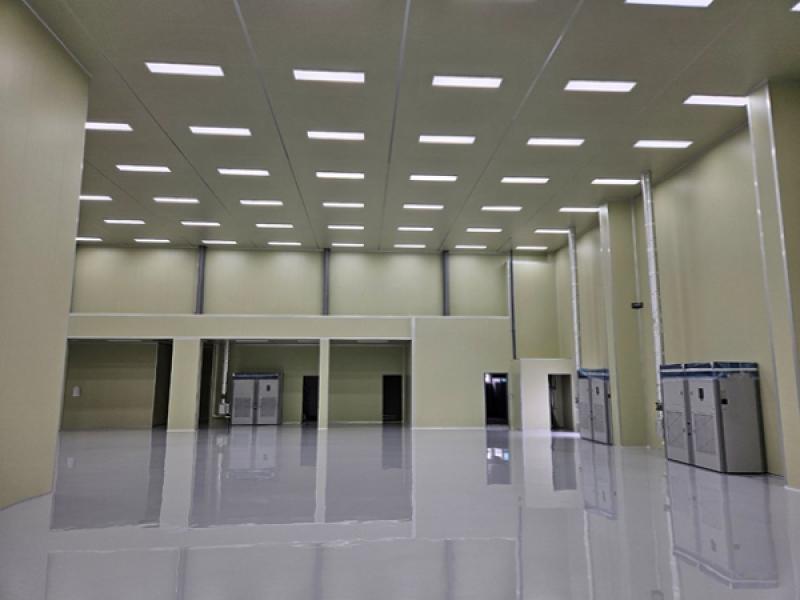
Drones, robotics and the battery industry are the priorities of NEO Battery Materials Ltd. (NBM-X), the Toronto-based company said in its FY 2027 Q1 results, with plans for increased output also in the works.
In the quarter ended May 31, the battery technology firm and manufacturer summarized its highlights, which included sales of battery packs and cells for the defence industry, its first publicly disclosed drone customer, and a research investment for niobium-based lithium batteries.
It reported revenue of $178,964 and a gross loss of $643,261 in the quarter. NEO said the results represent the “lumpy, variable nature of early-stage commercial production and scale-up phase,” and expects the revenue-to-loss gap to narrow as its production increases.
NEO is “adding momentum from the increasing global requirements for high-performance, non-Chinese and Foreign Entities of Concern battery products and solutions,” its president and CEO Spencer Huh said in a release.
Boosting production from its electrode factory in South Korea and expanding its battery cell assembly facility from a site adjacent to the factory are key goals for NEO, Huh said. Achieving both would be “a key catalyst to remove manufacturing bottlenecks and fulfill high-volume orders for contract manufacturing and proprietary battery products,” he continued.
Sustainable Biz Canada has reached out to NEO for comment, but did not receive a reply by time of publication.
NEO’s latest deals
NEO manufactures silicon-enhanced lithium-ion batteries for sectors such as drones, robotics, artificial intelligence, electric vehicles and energy storage systems. An example of its battery technology is a coating named NBMSiDE-P300 which elevates capacity.
Having strong ties to South Korea and the defence industry, NEO announced drone battery pack purchase orders from three Korean and Japanese defence and industrial drone manufacturers for testing and field validation in Q1.
Its first publicly disclosed drone customer was identified as Assetta Inc., a South Korean drone and aerospace company. NEO and Assetta signed a defence partnership in July to develop and manufacture high-performance battery products for Assetta’s current and upcoming drone platforms.
To fund development of high-power, niobium-based lithium batteries for defence and industrial applications with the University of Toronto, NEO was granted a multi-year, non-dilutive $180,000 investment from the Vancouver-based Mitacs Accelerate.
NEO’s defence strategy for the Korean market is its “leading priority for executing on go-to-market and building brand awareness and value,” Huh said.
“Increased domestic drone (original equipment manufacturer) leads are a direct testament to the need to replace Chinese supply chain reliance with performance-enhanced, Korean-manufactured alternatives,” he added.
Last week, NEO received a purchase order for 10,000 units of 34Ah drone battery cells from a South Korean battery pack manufacturer and to develop high-energy battery cells for e-mobility and electric motorcycles in Southeast Asia.
This week, the company announced it received orders from South Korean drone manufacturer Narma Inc. and a North American Fortune 500 automotive company for its drone battery packs and to support battery manufacturing functions for an advanced development project, respectively.
NEO expanding leased site in South Korea
In March, NEO announced it acquired 3.2-acre site to expand its leased electrode manufacturing facility. The expansion is planned to house commercial-scale drone and robotics battery cell manufacturing and the scale-up of silicon anode production.
Simultaneously, NEO plans to raise its silicon anode materials technology, NBMSiDE, to 20 tons per year, for integration into its drone battery applications.
The targeted annual capacity of the expansion is approximately 500 megawatt-hours (mW-h), NEO said. The initial production capacity is planned to be approximately 50 mW-h.
NEO intends to add working shifts at the first factory before the full installation and commissioning of the expansion, Huh said.


 Industry Events
 Locations
