Locations





The building industry is making progress in adopting lower-carbon materials, with projects participating in the Responsible Buildings Pact (RBP) nearly doubling their avoided greenhouse gas emissions in the initiative’s second year, according to its 2025-26 report.
The initiative of the Climate Smart Buildings Alliance (CSBA), which promotes the use of lower-carbon materials, grew its membership to 58 signatories and supporters, up from 37 in its first year.
Over the 2025-26 period, 23 companies reported avoiding more than 110,000 tonnes of greenhouse gas emissions across 124 pilot projects, up from approximately 60,000 tonnes in the pact’s first year. This was achieved despite two fewer companies reporting to RBP, as steel was accounted for along with concrete, which was the focus of Year One.
The second-year results show the transition to lower-carbon materials “is possible and realistic and impactful if we get more and more people just using lower-carbon materials where it makes perfect business sense,” David Messer, the executive director of CSBA, said in an interview with Sustainable Biz Canada.
CSBA is a Canadian industry alliance working to transform sustainability practices in the buildings sector, which accounts for approximately 40 per cent of global greenhouse gas emissions. The organization was created to help change the building sector’s culture and business practices around sustainable materials.
'The point is not perfection'
RBP expanded its membership through initiatives such as a leadership summit attended by senior figures from construction, banking, insurance and government. Even with a chill in discussing climate change, Messer said the leaders were dedicated to decarbonization.
The decline in reporting companies needs context, Messer said. Some companies did not pour “an ounce of concrete” in 2025 because of the downturn on housing construction, and opted not to report as a result.
The second year of RBP uncovered data on how lower-carbon concrete and steel were used by the members in their pilots. Low-carbon concrete was defined as a mix with global warming potential below regional baselines.
Approximately 43 per cent of the projects used low-carbon concrete, while 23 per cent used low-carbon steel. Projects using lower-carbon concrete incurred an average cost premium of approximately five per cent, compared with seven per cent for lower-carbon steel.
Performance was the most commonly cited barrier to using lower-carbon concrete, followed by cost, scheduling and availability.
“The point is not perfection,” Messer said about how the majority of projects did not make use of a lower-carbon material. “We recognize that low-carbon materials don’t necessarily make sense everywhere right now."
But such materials do make sense in some places, Messer added, and RBP wants companies to use them where it is viable and gradually make it the default choice for that situation.
“There’s a lot of corporate courage” to admit a lower-carbon material did not make sense for a project, he added. “We’re all trying, we’re all learning. Nobody’s perfect, but we need to learn together how to make it work.”
Insulation next for RBP
Having focused on concrete and steel, two major sources of embodied carbon in buildings, RBP plans to add insulation to its list of target materials in 2027, following a suggestion from its members.
Messer called insulation the “next logical material” for RBP to address. The Regional District of Nanaimo has found insulation to be responsible for 16 per cent of the embodied carbon of a typical residential project, the second-highest source after concrete.
A goal for the RBP next year is to work on system tools that can shift the building industry’s default options for concrete and steel to lower-carbon alternatives, Messer said. An example he gave is transitioning from using Portland cement to Portland lime.
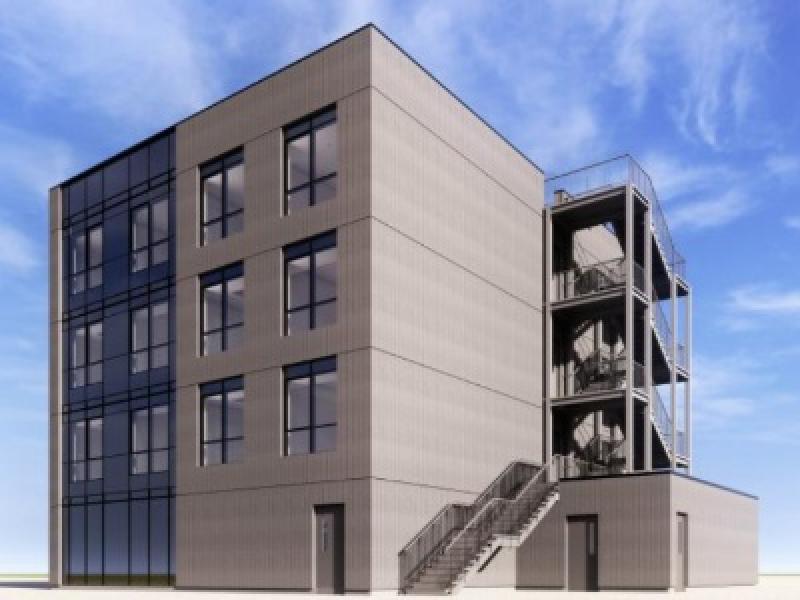
RBP is also participating in an experimental mass timber building project in Ohsweken, Ont. Called the Mass Timber Testing & Training Facility, or MT3F, RBP and its partners will stress test mass timber to generate data that insurers, contractors and developers can use to increase adoption of the material.
“We will burn this building, flood it, fill it with mold,” Messer said, “All these other things that are going to happen to mass timber buildings – which right now, there’s no data on.”
As for CSBA, it looks to assist the Canadian government in transforming “the whole of the building industry towards electrified equipment and lower-carbon materials” in defence and major projects.


 Industry Events
 Locations