Locations





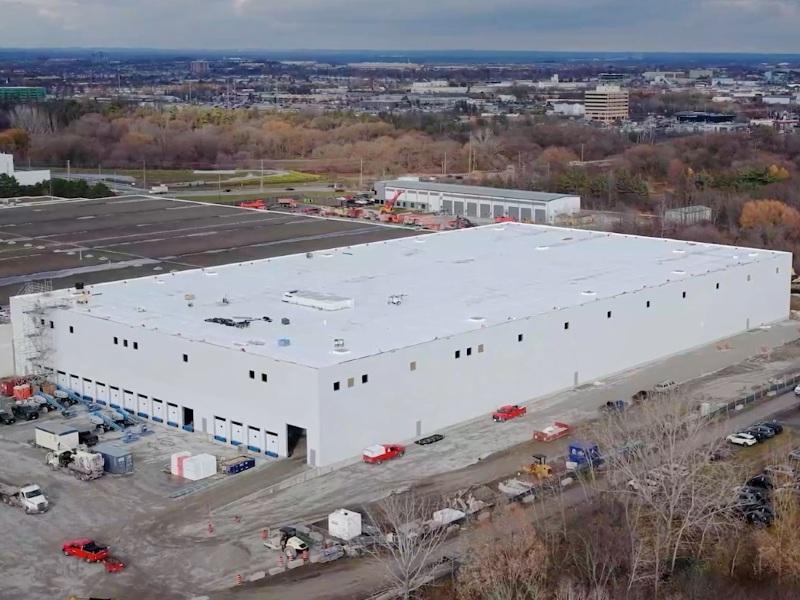
The expansion of Volkswagen’s parts distribution centre in Ajax, Ont. includes features geared toward electric vehicles (EVs), such as a new battery storage space and training rooms for its technicians to better handle electric cars.
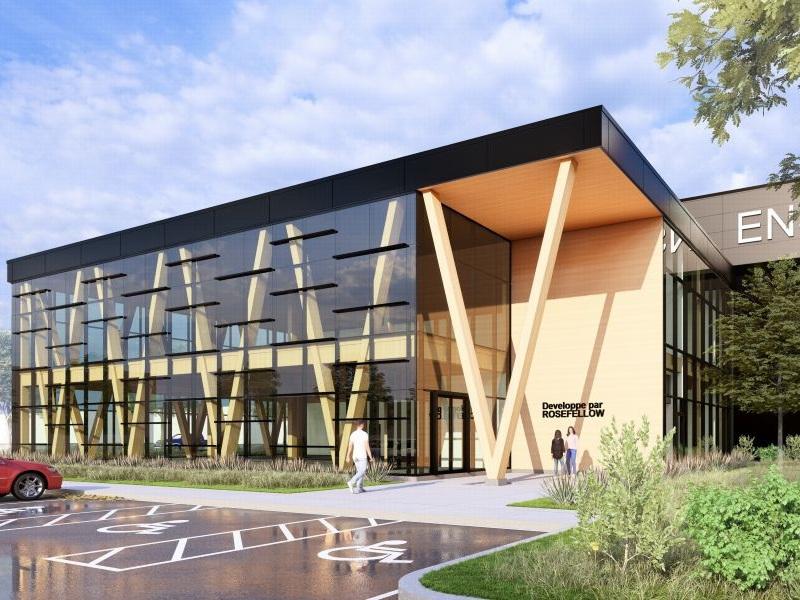
The hub at 777 Bayly St. W had an additional 115,000 square feet of space added, including a large‑bay logistics space. On top of that, the pre-existing facility of approximately 341,000 square feet is to be renovated to include EV workshops, battery storage rooms and enhanced technical training areas.
Volkswagen was at capacity in its pre-expansion facility, thus necessitating the expansion, Scott Brewer, the manager of group aftersales controlling business development at Volkswagen, said in an interview with Sustainable Biz Canada. Also, the German automaker expects car sales to increase in Canada and to have more demand for training space.
“We have so many more models and vehicles that are getting so much more complex and they require more parts now per vehicle — we need to store a wider arrangement at a much bigger supply of parts,” he said.
The Ajax facility serves as Volkswagen’s Canadian headquarters and primary parts distribution centre for Eastern and Central Canada.
The expansion is the first major capital project between Toronto-based Dream Industrial REIT (the landowner) and Volkswagen, Brad Keast, head of development and construction at Dream Industrial REIT, said in the interview.
Volkswagen’s cars getting bigger, more complex
From the Ajax distribution centre, Volkswagen ships a wide range of car parts to its dealers, such as nuts and bolts, glass components and side panels.
A major reason behind the facility enlargement is the ever-increasing size of cars, such as the Volkswagen Atlas, a seven-seater SUV. The Atlas, Brewer said, is made up of thousands of parts, which demands more storage space.
An additional reason has to do with EVs. Compared to gas-powered cars, the complexity to build an EV is “quite a bit more significant than a gas vehicle” due to the batteries and chips, he explained, adding more pressure to expand.
A notable feature relating to EVs in the expansion is a dedicated battery storage room of over 3,000 square feet that can hold 15 to 20 EV batteries and hundreds of individual battery modules. Mindful of the safety protocols for lithium-ion batteries, the room is self-contained and climate controlled to keep the energy storage devices at optimal temperatures.
Before the battery storage room became an option, Volkswagen had to store its EV batteries with an offsite Canadian company and colleagues in New Jersey, Brewer said. The new battery storage space will significantly shorten the company’s EV battery supply chain in Canada.
In addition to the expansion, Volkswagen is taking a 20,000-square-foot section of the original building and renovating it to include three new training spaces focused on EVs. Each of the training cells are to have an EV workshop. The cells, Brewer said, will allow Volkswagen to increase the amount of EV training it can offer to its dealership technicians.
Volkswagen is targeting completion of the renovation in Q3 2027.
Dream is in the process of having the expanded facility certified as LEED Silver, Keast said. To meet the standard, the building’s envelope is being developed to have a high degree of insulation for energy efficiency, the potential for a rooftop solar installation, and EV chargers.
EV interest on the rise in Canada
In its 2025 sustainability report, Volkswagen said it delivered just under one million battery-powered EVs, making up almost 11 per cent of its total sales. That figure increased from 8.3 per cent the year prior.
The German automaker’s EV roster in Canada includes the cross-over ID.4.
In March, Volkswagen announced it delivered four million EVs, making it one of the top-five EV manufacturers in the world.
After the pace of sales growth for EVs slipped in 2025, the Canadian government said there was an almost 75 per cent year-over-year increase in new zero-emission vehicles sold in March. Possible factors behind the shift include the federal government's $5,000 rebate for EVs and an uptick in gas prices, a survey by JD Power suggests.
The survey, released last Thursday, found new-vehicle shoppers in Canada who say they are “very likely” or “somewhat likely” to consider an EV for their next purchase increased to 34 per cent, from 28 per cent in 2025.
This is the first increase in EV consideration since tracking began in 2022, JD Power said, following years of declining or flat consumer interest.


 Industry Events
 Locations