Locations






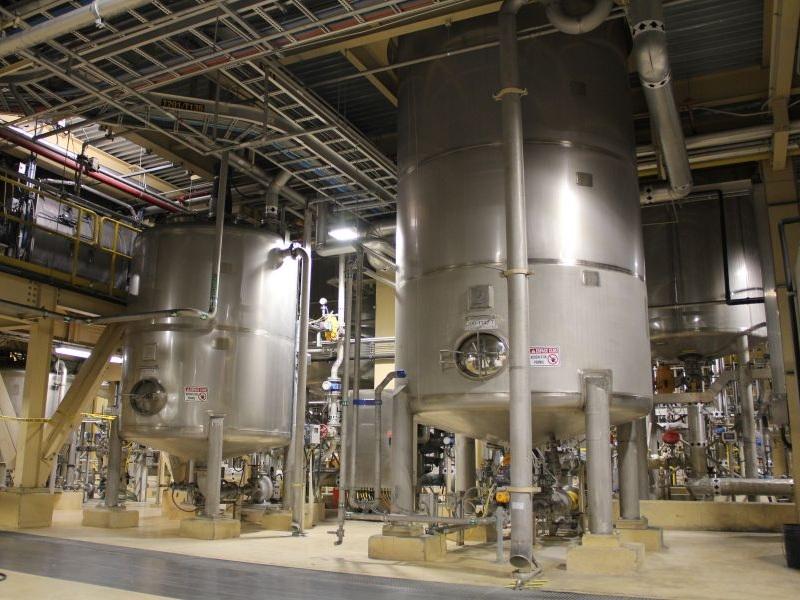
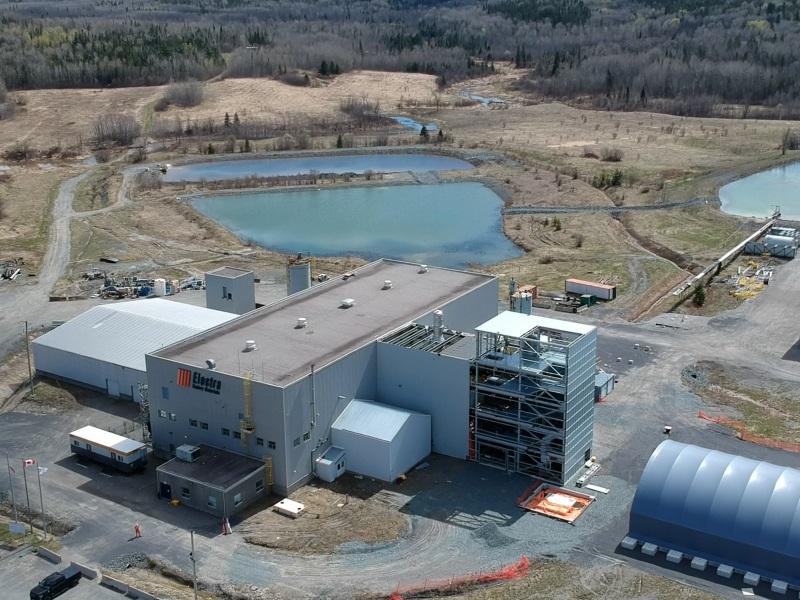
Nano One Materials Corp. (NANO-T) is advancing on the development of a demonstration line in its Candiac, Que. battery material facility to raise production and supply the samples it needs to move toward commercialization.
“It’s really the automation of the demonstration line,” Denis Geoffroy, COO of Burnaby, B.C.-based Nano One, said in an interview with Sustainable Biz Canada about the expansion, which involves a 20-cubic-metre reactor.
The reactor is based on Nano One’s One-Pot technology, where elements such as lithium and iron are mixed in the first step of producing cathode active materials (CAM), a critical component of lithium-ion batteries. CAM provides the lithium in a lithium-ion battery, driving most of a battery’s performance, Geoffroy said, and is the most expensive part of a battery cell.
The demonstration line is expected to output 800 tonnes of a CAM called lithium iron phosphate (LFP) per year, generating samples at volumes amenable to larger customer offtakes and alongside an existing 200-tonnes-per-year pilot line. Both lines would share the downstream processing equipment.
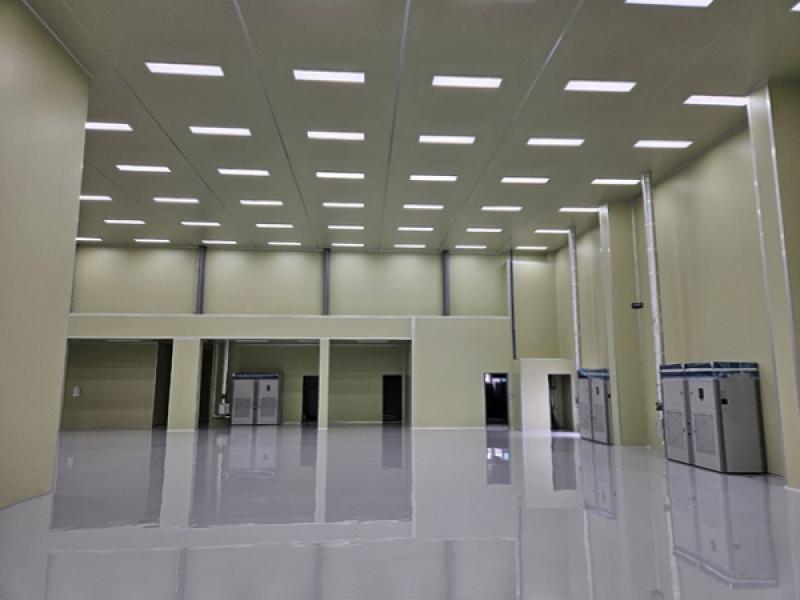
The 80,000-square-foot Candiac facility is designed to showcase the One-Pot process and de-risk the technology, a key step of Nano One's roadmap to elevate its production to tens of thousands of tonnes of LFP per year.
The demonstration line
The Candiac facility was acquired by Nano One in 2022 from Johnson Matthey Battery Materials Ltd., Geoffroy said, 12 years after it was built by Phostech Lithium. Upon taking over the LFP production site located in a suburb of Montreal, Nano One transformed it from a small commercial plant to a pilot facility equipped with a One-Pot reactor.
The pilot line produces LFP samples that can be validated by customers to supply small offtakes for defence and energy storage system customers. Additionally, it can minimize risks with One-Pot and optimize the technology, Geoffroy said.
To produce the samples needed for larger customer offtakes and further validate Nano One’s LFP for commercial operations, Nano One worked to add a demonstration line.
In late July, the company disclosed the detailed engineering for the new line was 85 per cent complete and the project was on schedule. Commissioning and validation is expected to be finished in the first half of 2027, Geoffroy said.
25,000-tonne LFP facility planned
The One-Pot process, Geoffroy said, can help decouple Western economies from China’s CAM production. The Asian country dominates the sector, Benchmark Mineral Intelligence said, accounting for 87 per cent of CAM production capacity in 2024.
Nano One can compete with Chinese CAM producers due to the simplicity and low environmental impact of One-Pot, Geoffroy said, while enhancing its economic case. Compared to conventional means of producing CAM, it does not require precursor CAM or a wastewater management step, reducing water use by approximately 80 per cent and greenhouse gas emissions by 50 to 60 per cent.
Geoffroy joined Nano One because “I saw a process that was simpler,” he said, and "my belief was the only way to bring back manufacturing out of China is you need to have a better way to do (it).”
To make that dream a reality, Nano One aims to develop a commercial-size facility by licensing its One-Pot technology or forming a joint venture with another company.
The goal is to have a facility that can output 25,000 tonnes of LFP per year. Nano One is scouting for a location with its partners, Geoffroy said, specifically in North America and Europe. The location will depend on Nano One’s partners, the support it receives and regulations, he explained.
By 2029 to 2031, Geoffroy expects Nano One can have a commercial-scale factory ready to sell LFP to customers. Energy storage clients would likely be its first buyers, Geoffroy said.


 Industry Events
 Locations