Locations



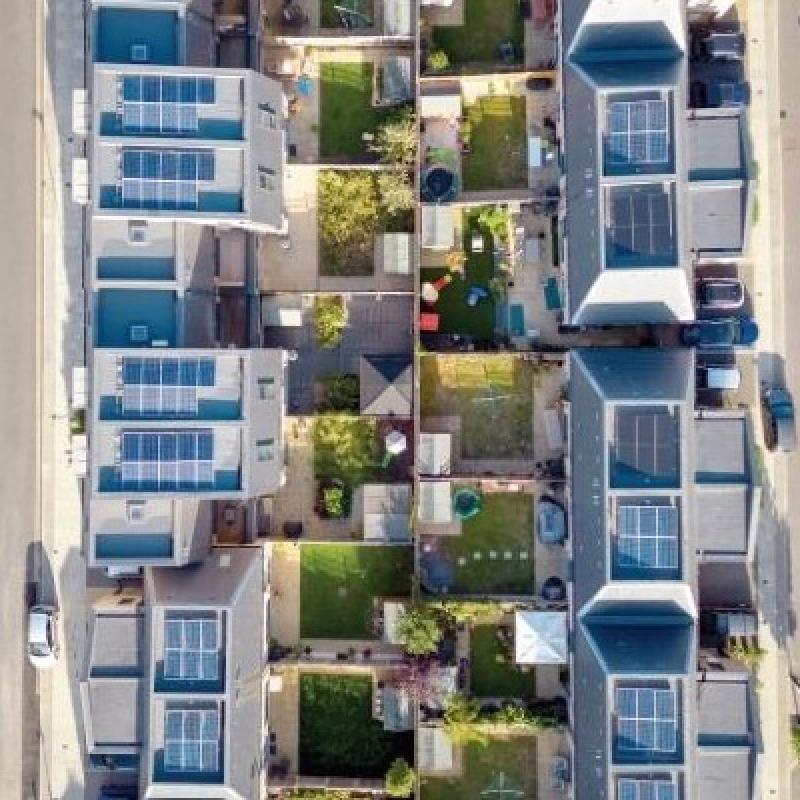
The economics for small-scale energy assets like rooftop solar and battery storage in homes across four major Canadian cities are poor, a report by Schneider Electric Canada and HEC Montréal has found. But there are a handful of compelling use cases.
The second part of a position paper on Canada’s “energy prosumers,” it examines the financial case for owners of single-detached homes in Toronto, Montreal, Vancouver and Edmonton installing and owning rooftop solar panels, a battery storage system and an electric vehicle (EV).
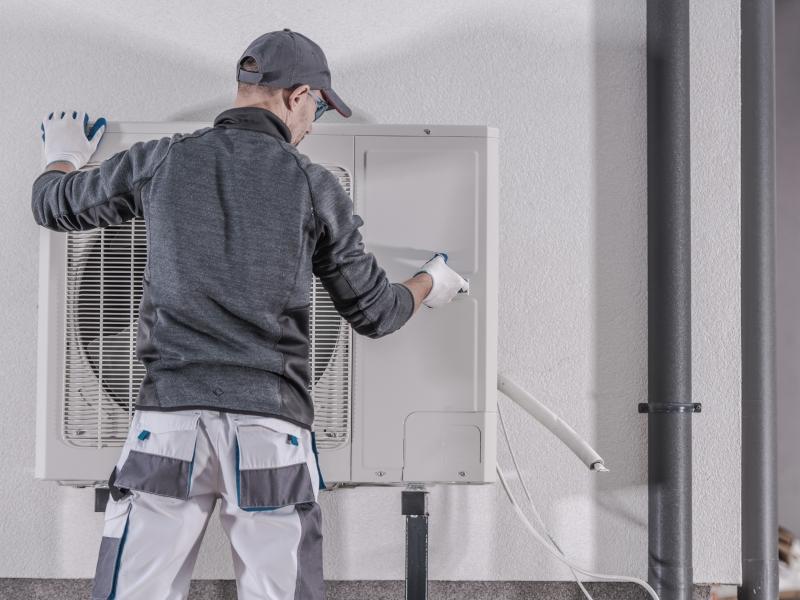
These systems are considered distributed energy resources (DERs) — small electricity generation sources or storage devices near the site of use.
Prosumers are individuals or entities that generate some or all of their own energy.
After comparing different combinations of technologies and electricity rate structures in the four cities, the study’s authors found the strongest financial case rests with the combination of an EV and solar panels. The pairing had the best internal rate of return overall and a “significantly less negative” expectation for created value.
While the rate of return for every scenario was not positive, prosumers benefit themselves and their communities by reducing household carbon emissions, having more energy-resilient homes and reducing the need for pricey infrastructure upgrades, the report states.
“When you look strictly at the homeowner’s 15-year bill savings under today’s rates, most DER setups don’t yet pay for themselves. But that’s only part of the story,” Frederick Morency, vice-president of sustainability, strategic initiatives and innovation at Schneider Electric Canada and a contributor to the report, said in an email exchange with Sustainable Biz Canada.
Returns on DERs are rare
Schneider and HEC Montreal focused on the four cities because they account for over 40 per cent of Canada’s population, and represent a range of climates, solar conditions, regulations and electricity markets.
Hourly electricity consumption patterns of a single-detached home and potential solar energy generation per city were modelled. It was applied to five scenarios involving solar panels, battery storage and an EV – alone and combined with each other – and how those would perform for 15 years under certain rate structures and if homes could sell excess electricity to the local grid operator.
Every scenario ended with a negative net present value, which measures the expected profitability of the investment. Losses ranged from almost $38,000 to under $500.
Almost every scenario ended with a negative internal rate of return, from as low as almost 58 per cent. However, there were a handful of positive rate-of-return scenarios. Most involved an EV with solar panels under time-of-use and tiered rates in Edmonton. If selling back to the grid was allowed, it meant a rate of return of three per cent and 4.2 per cent for time-of-use and tiered rates, respectively.
The battery-only scenarios consistently yielded the most negative results on returns and present value in all cities and rate structures. The study’s authors noted the high price of a standalone battery and the value coming from either arbitrage or the backup power potential, which was not accounted for in the modelling.
Pairing an EV with solar panels was found to have the most promising performance across the board. The combination did the best overall on net present value and had the highest rate of return, particularly when selling electricity to the grid was permitted.
The findings indicate investing in DERs solely on anticipated electricity bill savings over the lifetime of the installations is “generally not financially profitable for the homeowner," the study’s authors concluded.
Selling power to the grid a game changer for DERs

While few scenarios showed households saving on electricity bills by owning DERs, the study notes there are unaccounted benefits.
First, DERs can offset carbon emissions on the grid. Second, the addition of decentralized energy generation can reduce or delay transmission and distribution infrastructure upgrades. Third, it helps to avoid the impacts of power outages.
Power outages impose substantial costs on consumers. Regulatory estimates show Ontario residential customers placed a value on avoided outages of $4.94 per kilowatt-hour, with that value at $4.50 among Quebec residential users. Commercial users placed a much higher value on avoided outages, ranging from $100 per kilowatt-hour to as high as $237 per kilowatt-hour.
The three advantages “suggest that societal returns from distributed resources can exceed private financial costs and in some cases, returns,” the report states, justifying policies to encourage the use of DERs.
For example, it urges governments and regulators to prioritize business models which fairly compensate prosumers for selling electricity to the grid. In almost every scenario in the study, the rate of return and net present value was improved if households could sell electricity to the grid.
Utilities are recommended to move toward more dynamic, cost-reflective rate structures such as wider time-of-use spreads.
Those two policies "alone would move DER economics from 'not viable' to 'compelling' for many Canadian households," Morency said.
Another suggestion is to include incentives such as rebates, performance-based incentives tied to generation and low-interest green loans to make DERs more commonplace.
Schneider and HEC Montréal are interested in taking a deeper dive into the social benefits of DERs, doing province-by-province modelling, and better understanding future rate structures, Morency said.


 Industry Events
 Locations