Locations



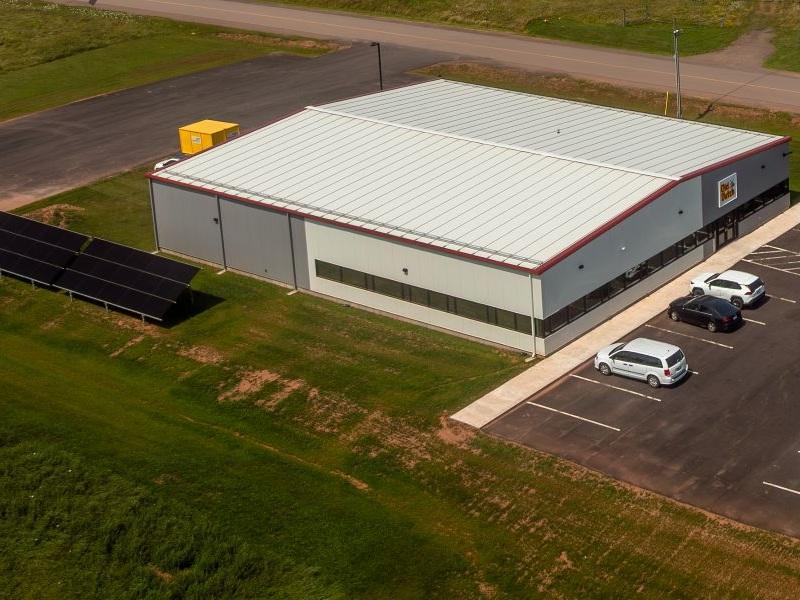
A solar array, geoexchange system and energy recovery technology have enabled Old Dutch Foods to make its accounting office and warehouse facility in Summerside, P.E.I., fossil fuel-free, establishing a new benchmark for sustainability within the snack food manufacturer’s operations.
Opened February, the 8,400-square-foot facility in Slemon Park is “a first foray into a fully environmentally friendly building” for Old Dutch Foods, Scott Kelemen, its senior national director of brand and market strategy, said in an interview with Sustainable Biz Canada.
The facility releases no carbon dioxide from its operations, Old Dutch Foods said, making it one of the snack maker’s greenest buildings. It demonstrates the company is “being very conscious of being responsible to the environment and communities in which we serve,” Kelemen added.
Headquartered in Minnesota with a Canadian head office in Winnipeg, Old Dutch Foods is known for brands such as its eponymous potato chips and Humpty Dumpty. It has production sites in Winnipeg, Calgary, Airdrie, Alta. and Hartland, N.B.
Clean energy from the earth and sky
Old Dutch Foods prioritizes long-term investments, Kelemen said, which translates into focusing on owning physical assets where it is possible to have greater control over future costs. Investing into on-site renewable energy generation fits into this thesis, he continued. Solar panels, for example, can lock in most of the company’s energy costs at a fixed rate.
The facility’s solar array, located on the same field the building sits on, spans approximately 160 metres. It is expected to generate approximately 40 kilowatts of electricity.
Beneath the building, 16 boreholes connected through a closed-loop geoexchange heat exchange system can be found, serving as the primary heating and cooling source of the building.
The energy from the building’s exhausted air is captured by the energy recovery ventilation (ERV) system, tempering incoming fresh air to reduce energy consumption. The system improves indoor air quality while reducing the energy needed to heat and cool the facility, Kelemen explained.
Such technologies allowed Old Dutch Foods to omit a natural gas-powered heating system in the building. “Everything that has been in place is sufficient for our needs,” Kelemen said.
The equipment lets Old Dutch Foods satisfy a three-part commitment it made when developing the facility, Kelemen said: “Meeting consumer expectations, aligning with public environmental values and then advancing localized environmental protection.”
Other than reducing carbon emissions, Old Dutch Foods is expected to generate financial savings from the sustainability elements. The first source is from refundable tax credits. The second is the expected “substantial” savings on heating, ventilation and electricity costs. An early estimate has suggested Old Dutch Foods can save up to $50,000 per year in utility bills, Kelemen said.
The start of a 'longer-term commitment to the future'
As its first dedicated building with solar panels, a heat exchange system and ERV equipment, the Eastern Canadian accounting office and warehouse facility represents a milestone for Old Dutch Foods.
For the company, it may mark the beginning of its journey into highly sustainable buildings. Old Dutch Foods is aiming to use similar technologies in its other buildings, Kelemen said, such as installing rooftop solar panels on its production facilities and exploring alternatives to natural gas-powered equipment.
Other sustainability initiatives Old Dutch Foods has taken up include:
- waste reduction through modular product design, starch recovery, food waste donation and repurposing raw potato and corn waste for animal feed;
- conserving water through wastewater recovery;
- reusing oil and caustic chemicals;
- conserving energy with LED lighting and telematics; and
- recycling or reusing corrugated cardboard, electronic waste and scrap metal.
“It’s showing the start of what we want to do as a longer-term commitment to the future,” Kelemen said.


 Industry Events
 Locations